
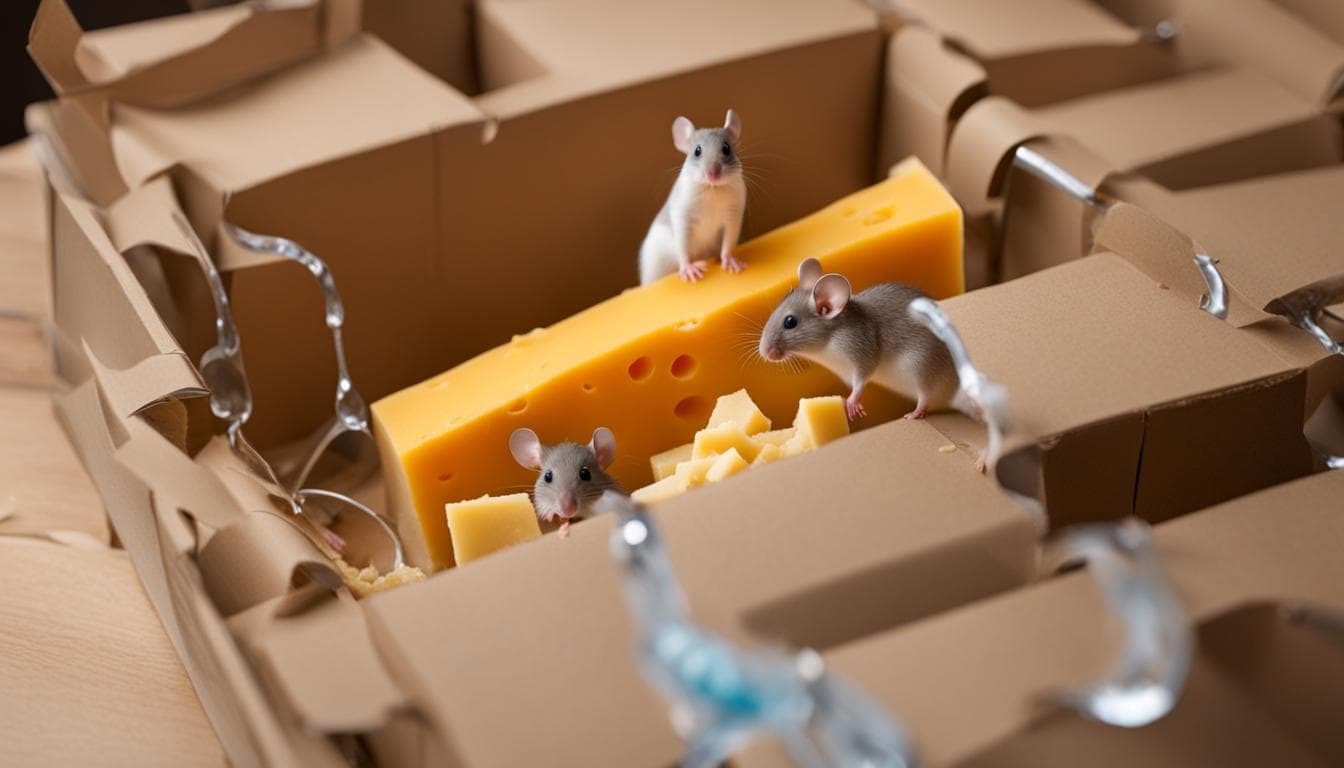
This guide compares DIY mouse traps and their limitations. Improvised capture is not automatically safe or humane: falls, escape, entrapment, stress, and delayed checking can harm animals. For a household control plan, prioritize evidence-led trapping, safe cleanup, sanitation, and exclusion.
Best tools for this trapping problem
Use traps to remove the current mice, then close the openings that made the activity possible. The safest setup is targeted, inspected daily, and paired with basic exclusion.

Motel Mouse Humane Live-Catch Mouse Traps, 4-Pack
Live-capture product reference, not a recommendation: CDC advises against live traps because frightened rodents may urinate and increase exposure risk.
Check first: Check dimensions, latch reliability, and recent seller reviews before ordering.
Check on Amazon
Blinc Humane Mouse Trap, 2-Pack
Live-capture product reference only. A no-kill label does not establish welfare or household safety; CDC advises against live traps.
Check first: Confirm the opening size and closure design suit mice, not larger rodents.
Check on Amazon
Victor Tin Cat Multi-Catch Live Mouse Trap
Metal live-capture product reference only, not a routine household recommendation. CDC advises against live traps.
Check first: Multi-catch traps still need frequent inspection; do not leave captured mice unattended.
Check on Amazon
Locking Mouse Bait Stations, 6-Pack
For situations where bait is legally and safely appropriate, locking stations help keep bait more contained than loose placement.
Check first: Use only according to label directions and avoid unsafe placement around children, pets, and wildlife.
Check on AmazonSafety note: Follow product labels, keep supplies away from children and pets, and use professional pest control when activity is heavy, recurring, or inside wall/attic voids.
Key Takeaways:
- DIY mouse traps are improvised designs with unverified welfare and performance for rodent control.
- Materials like buckets, spoons, peanut butter, and paper plates can be used to assemble improvised homemade mouse traps.
- Using a bucket and spoon trap or a toilet paper roll trap are improvised methods with capture and confinement risks for catching mice.
- Plastic bottle spin traps and glass and nickel traps have capture, escape, and injury limitations.
- Check local handling rules before live capture; maintain sanitation and exclusion.
Using a Bucket and Spoon Trap
If you’re looking for an improvised DIY mouse trap idea, look no further than the bucket and spoon trap. This simple yet ingenious trap can help you attempt live capture, without a guarantee of no injury. All you need is a large bucket, a spoon, and some peanut butter.
To set up the trap, balance the spoon on a countertop with the bucket placed strategically underneath it. Apply a small amount of peanut butter on the handle of the spoon. This will attract the mouse towards the bait. As the mouse tries to reach the peanut butter, it will fall into the bucket along with the spoon, effectively trapping the rodent.
A bucket-and-spoon design is an improvised capture attempt, not a demonstrated no-harm or ethical improvement. Do not use water or leave captured animals unattended. Compare the linked control and prevention guidance before choosing a method. Related: pest control; say goodbye to those pesky mice.
Table: Pros and Cons of the Bucket and Spoon Trap
| Pros | Cons |
|---|---|
| Easy to set up | Requires space for the bucket |
| Injury and stress remain possible | Relies on the mouse approaching the bait |
| Cost-effective | May not be effective for all mouse species |
Any live-capture device requires frequent checks and a legal, humane handling plan prepared in advance. Do not assume distant release prevents return or is lawful. Pair control with sanitation and exclusion.
Homemade Mouse Traps: Toilet Paper Roll Trap
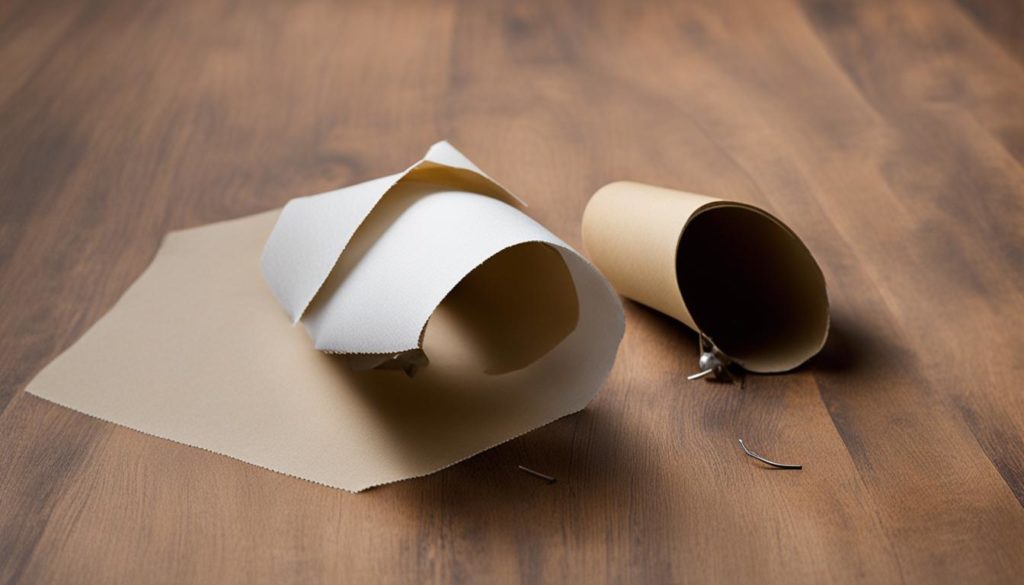
The toilet paper roll trap is an improvised live-capture design whose safety, effectiveness, and welfare are not established. It is described for context, not recommended for household control.
The key to this trap is the use of a toilet paper roll. Start by creasing the roll to form a flat-sided tunnel. Place a treat like a cracker with a dab of peanut butter on one end of the roll. Next, position a tall bucket or trash can beneath the roll and balance the tube on the edge of a table or counter.
The intended mechanism is for a mouse to enter a baited tube and fall into a container. Capture is not guaranteed; a fall or prolonged confinement can injure or stress an animal.
Benefits of the Toilet Paper Roll Trap:
- Simple and inexpensive to make
- Capture and welfare are not independently established
- Easy to set up and use
- Can be reused for multiple captures
Evidence note: no verifiable source is supplied for the former homeowner testimonial. This page does not claim that this design has been independently tested or shown to avoid injury.
Check any live-capture device frequently. Determine lawful and humane handling before setting it; do not assume relocation is permitted or effective. Sanitation and exclusion remain necessary. Related: avoid future mouse infestations.
Innovative Mouse Traps: Plastic Bottle Spin Trap
Regarding DIY mouse traps, the plastic bottle spin trap is an improvised design, not a verified safe or effective solution. It combines simplicity and convenience with the added benefit of being self-resetting.
To set up the plastic bottle spin trap, you will need a plastic bottle, a skewer, and a bucket. Skewer the plastic bottle horizontally and position it over the bucket so that it can spin freely. Place a small amount of peanut butter on the inside of the bottle as bait. When the mouse goes for the peanut butter in the trap, the spinning bottle will make it lose balance and fall into the bucket.
A rotating-bottle design may remain set after a capture, but this does not establish capture rate, safe confinement, or suitability for a high population. Inspect frequently and do not use water.
Advantages of the Plastic Bottle Spin Trap
- Self-resetting: The trap resets itself after each catch, eliminating the need for constant manual intervention.
- Eco-friendly: The use of a plastic bottle repurposes waste material and reduces environmental impact.
- Welfare limits: falls and confinement can cause harm; no ethical superiority is established for rodent control.
- Cost-effective: The materials required for the plastic bottle spin trap are readily available and inexpensive.
Improvised traps do not replace a monitored control plan. Use frequent checks, lawful handling, food control, and durable exclusion; seek qualified help if you cannot do this safely.
DIY Glass and Nickel Trap
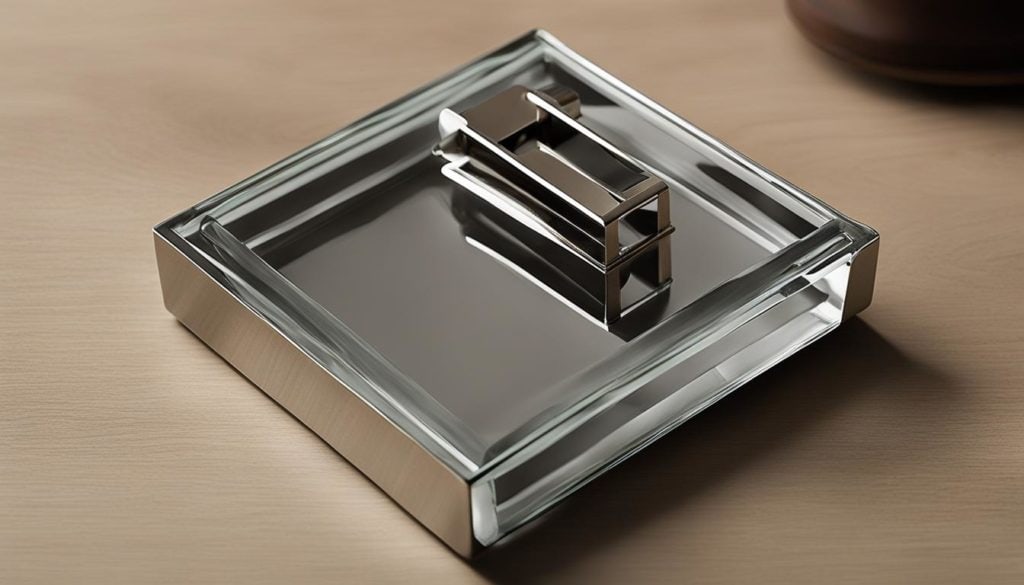
If you’re looking for a simple and quick DIY mouse trap, look no further than the glass and nickel trap. With just a glass and a nickel, you can create an improvised method with falling-glass and injury risks. Here’s how:
1. Take a glass and smear some peanut butter on the inside of it. Make sure to use enough peanut butter to attract the mouse.
2. Place the glass on its side and prop it up on a nickel. Place the trap where you think mice are active, near an entry point or along a wall.
3. When the mouse tries to reach the peanut butter, the glass will fall and trap it inside. The weight of the nickel will help ensure that the glass stays in place.
Evidence note: no verifiable author or credential supports the former expert endorsement. A falling glass is not established as a no-injury capture method.
A glass-and-coin design can fall, break, injure an animal, or allow escape. It is not recommended as a safe household control method. Prepare a lawful handling plan and address entry points.
| Advantages | Disadvantages |
|---|---|
| Simple and quick to set up | Requires constant monitoring |
| Injury and stress remain possible | May not be as effective for a large number of mice |
| Minimal materials required | May require multiple traps in different areas |
| Can be positioned in targeted areas | Requires regular cleaning and maintenance |
Do not rely on a falling-glass trap for safe or reliable control. Choose a purpose-built, appropriately protected trap and follow its label, or obtain qualified help.
Release and Prevention Tips
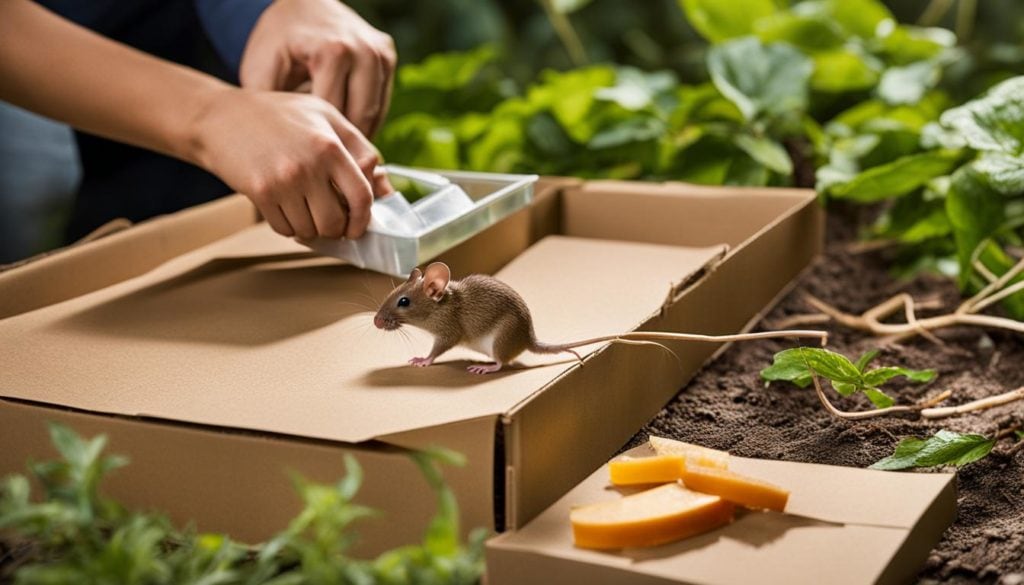
If a mouse is already in an improvised trap, keep children and pets away, avoid direct handling, and ask a qualified local professional for lawful handling advice. Relocation can be illegal and can harm the animal; do not assume release is safe or humane. Prevention still requires food control, appropriate repairs, and monitoring:
1. Check lawful and humane handling before live capture
Do not assume that releasing a mouse a mile away is lawful, humane, or effective. Local rules vary; UC IPM notes that relocation can fail and expose released mice to aggression, predators, or exposure. Obtain local guidance before live trapping.
2. Block off entry points
To prevent mice from entering your home in the future, thoroughly inspect your property for any potential entry points. Seal cracks in walls, gaps around doors and windows, and any other openings that mice could use to gain access. Remember that mice can squeeze through very small gaps, so be thorough in your inspection and sealing efforts.
3. Maintain good sanitation practices
To keep mice away, it’s important to keep your home clean and practice good sanitation. Regularly clean up crumbs, spills, and food debris. Store food in airtight containers and promptly dispose of garbage in sealed bins. Removing potential food sources makes your home less inviting to mice.
4. Remove attractants
Mice are also attracted to clutter and nesting materials. Minimize potential nesting sites by decluttering your home and organizing storage areas. Remove piles of papers, cardboard boxes, and other materials that mice could use for nesting. By creating a less appealing environment, you reduce the likelihood of attracting mice.
A control plan needs safe trapping, lawful handling, sanitation, exclusion, and monitoring. These steps reduce recurrence; they do not guarantee a permanently mouse-free home.
Conclusion
DIY designs are not established here as humane, safe, or more effective than purpose-built traps. Consider the risks and use an evidence-led plan with frequent checks and safe placements. Related: mouse traps.
Catching a mouse does not establish that activity has stopped. Use lawful handling, food control, safe cleanup, appropriate gap repair, and follow-up monitoring.
Judge progress by fresh evidence and trap checks, not a promise of a pest-free home.
FAQ
How do you make a homemade mouse trap?
This page does not establish a most-reliable DIY design. Do not add water to a bucket trap: drowning is not humane. Prefer an appropriate purpose-built trap with safe placement, label compliance, and daily checks.
Are DIY mouse traps humane?
Not automatically. Improvised live capture can cause injury, stress, escape, or prolonged confinement. Do not use drowning; prepare a lawful humane handling plan before setting a live-capture device.
What materials do I need to make DIY mouse traps?
You can use simple materials like buckets, spoons, peanut butter, paper plates, and plastic bottles to create DIY mouse traps.
Can I use homemade mouse traps to catch mice without killing them?
A live-capture design may catch without immediately killing, but that does not establish freedom from injury or stress. Use an appropriate protected trap and obtain guidance for lawful handling.
How do I set up a bucket and spoon trap?
Simply balance the spoon on a countertop with the bucket underneath, put a dab of peanut butter on the spoon handle, and wait for the mouse to try and get it.
How does the toilet paper roll trap work?
Crease the roll to form a flat-sided tunnel, put a treat with peanut butter on one end, and place a tall bucket or trash can beneath the roll. The mouse will be lured into the tunnel and fall into the trap.
How does the plastic bottle spin trap work?
Skewer a plastic bottle and position it over a bucket so that it spins when the mouse runs out to get the peanut butter. The spinning motion of the bottle will cause the mouse to fall into the bucket repeatedly.
How do I set up the glass and nickel trap?
Put some peanut butter on the inside of a glass and prop it up on a nickel. When the mouse tries to get the peanut butter, the glass will fall and trap it inside.
What should I do after catching a mouse?
Do not assume distant release prevents return or is lawful. Obtain local handling guidance, then address food access and entry gaps and monitor for new signs.
How can I prevent mouse infestations?
Maintaining good sanitation practices, removing attractants, and keeping your home clean can help prevent future mouse infestations.
Source Links
- https://macgyverisms.wonderhowto.com/how-to/5-clever-ways-make-simple-no-kill-trap-for-mice-rats-0147621/
- https://journal.chrisglass.com/2005/09/how_to_catch_a_.html
- https://www.shtfpreparedness.com/how-to-build-a-self-resetting-mouse-trap/
Safety standard for mouse cleanup and control
Never dry-sweep or dry-vacuum mouse droppings, urine, or nesting material. Wet contaminated material with disinfectant first, wear disposable gloves, let the area sit, then wipe and dispose of waste safely. This article is reviewed against CDC cleanup guidance, EPA rodenticide safety notes, and university IPM exclusion guidance.
- Keep traps and bait stations away from children, pets, and food-preparation surfaces.
- Do not relocate live mice off-property unless local law allows it; relocation can be restricted, ineffective, or unsafe.
- Call a licensed pest professional for large infestations, repeated activity after sealing/trapping, contaminated insulation, or health-risk situations.
Primary references: CDC rodent cleanup guidance, EPA rodent bait safety, and UC IPM house mouse exclusion guidance.
Welfare and release reference: UC IPM House Mouse Pest Notes discusses frequent live-trap checks, relocation limitations, and why drowning is not humane.
Household trapping reference: CDC How to Trap Up to Control Rodents recommends snap traps, daily checks, and keeping traps out of reach of children and pets; it advises against household glue and live traps.




Alexios Papaioannou is the founder and lead editor of Mice Gone Guide. He oversees research, article review, and content updates focused on mouse prevention, humane control, home proofing, and safety-first household guidance.