
Rodent Waste Identification & Health Safety
Mouse Droppings: Visual Identification, Size Scale & Lookalikes
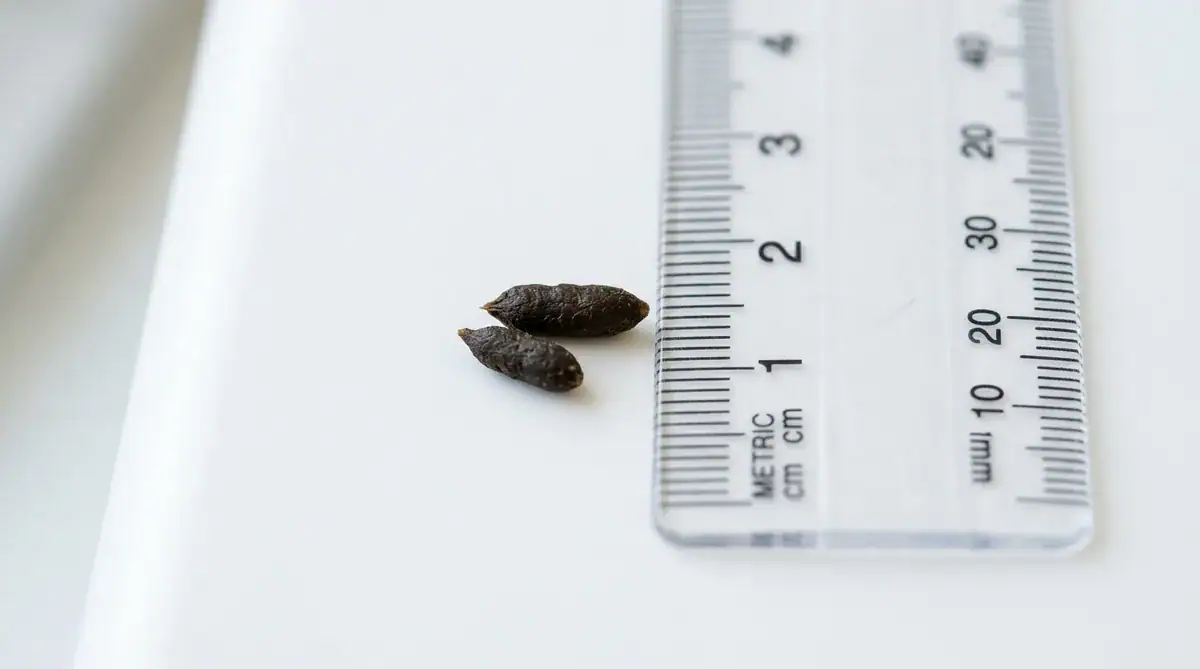
Scope: This is a visual comparison guide, not a species or disease test. Do not handle waste to identify it. For the complete wet-cleaning procedure, use our safe rodent-waste cleanup guide.
What Mouse Droppings Look Like: Size, Shape & Color
House mouse (Mus musculus) droppings are often described as small, dark pellets. These features are approximate clues, not diagnostic markers:
- Length: Arizona Extension gives 3 to 6 millimeters (1/8 to 1/4 inch) as a reference, not a diagnostic cutoff.[7]
- Shape: Slender, cylindrical spindle with tapered or pointed ends on one or both tips.
- Color: Dark brown or black material may be consistent with rodent waste, but color does not identify the animal or establish age.
- Changing appearance: Fading, dullness or dust do not prove that waste is old or that activity has ended.
- Do not test texture: Do not squeeze, crush or disturb suspected waste. Record the location and follow appropriate cleanup precautions.
Crushing dry rodent pellets pulverizes potentially infectious matter into the air. Color and shine alone cannot reliably date droppings or establish whether an infestation is active. After safe wet-cleanup, check for new droppings and other signs.
Dropping observation checklist
Use observations to plan a safe next step, not to calculate a species match or disease risk.
Record without handling
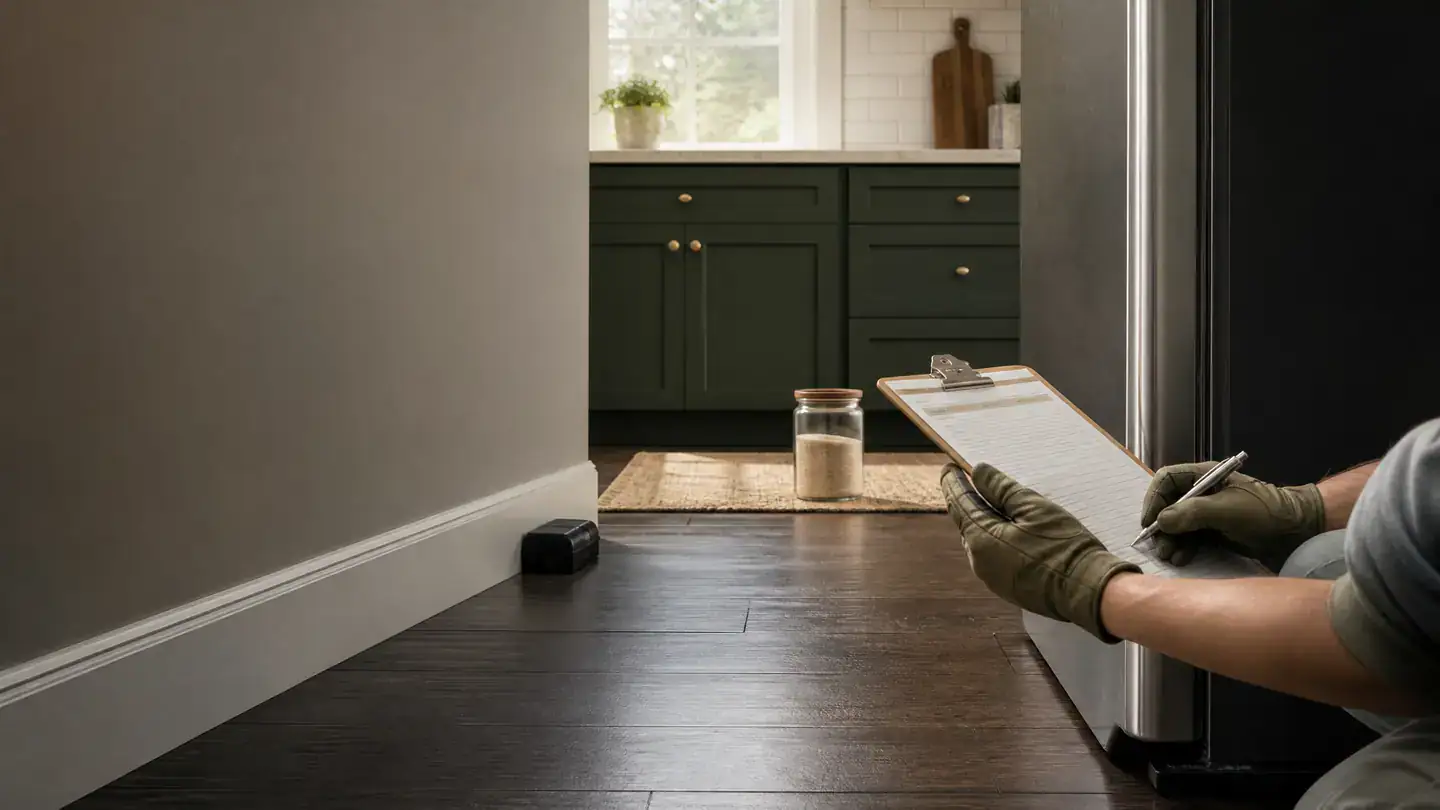
Note the room, surface and distribution. Photograph accessible evidence from a safe distance. Do not move, crush or touch it to measure or test it.
Consider more than appearance
Look for other safely observable evidence, such as damaged packaging or a clear animal sighting. A sound or one pellet does not establish an infestation size.
Choose safe cleanup or professional help
Follow the CDC cleanup instructions. Do not dry-sweep or vacuum untreated waste. Get qualified help for heavy, inaccessible or ventilation-system contamination.
Record what appears after cleanup
New evidence in a documented, safely cleaned location can support further investigation. It does not reveal the animal count or guarantee a particular diagnosis.
Size Reference Table: Mouse vs Rat vs Cockroach vs Bat
| Possible source | Clue | Important limitation |
|---|---|---|
| Mouse | Small pellet-like material near accessible shelter or food | Appearance overlaps with other waste; do not infer species or infection |
| Rat | Adult rat droppings are generally larger than mouse droppings | Young animals and incomplete observations complicate size comparisons |
| Bat | Material beneath a suspected roost may warrant wildlife identification | Do not crumble material or handle a bat to investigate |
| Cockroach or other source | Small specks or pellets may be confused with rodent waste | Use other evidence and qualified identification; a photograph is not a certainty |
Fresh vs. Old Droppings: What Changes & Why It Matters
Appearance cannot reliably date feces. Do not classify waste as fresh or old from color, shine, dust or texture, and never touch or crush it to test freshness:
- Dark or glossy material: A visual observation, not a timestamp. Record it without handling.
- Dull, faded or dusty material: Not proof of old waste, an ended infestation or safe handling.
- Use a dated record: Photograph the location without disturbing waste, arrange safe cleanup, and record any additional material found afterward. Reappearance warrants investigation; a fixed 48-hour check cannot determine species or population.
Video Guide: Mouse vs. Rat Droppings Comparison
This visual comparison provides examples, not a confirmed identification of waste in your home. Do not copy any handling or crumbling demonstration; keep suspected waste undisturbed until appropriate cleanup.
Where Mouse Droppings Appear Most Frequently
Record evidence at accessible locations such as the following. A location is a clue for inspection, not a species diagnosis:
- Kitchen baseboards & toe-kicks: Underneath the dishwasher, range, and refrigerator.
- Lower pantry shelving: Especially around flour, rice, cereal, and pet food bags.
- Under-sink vanity cabinets: Clustered around plumbing cutouts in the drywall.
- Garages & utility rooms: Along the concrete foundation wall and water heater base.
- Attic joists: Near soffit transitions and insulation tunnels. See our attic insulation guide.
One Sign Is Not Enough: Corroborating Evidence
A single pellet does not reliably establish species or current population. Look for other evidence without disturbing waste, and seek qualified identification when findings remain uncertain:
- Gnaw marks: Newly documented damage on baseboards or food cartons can support investigation; color alone does not date a gnaw mark.
- Nocturnal noises (clue only, not proof by itself): Scratching or scurrying in walls at night suggests inspecting nearby baseboards for physical droppings or gnaw marks.
- Grease rub marks (sebum): Dark oily smudges left along wall junctions.
- Urine odor: Sharp, musky, ammonia-like scent inside enclosed lower cabinets.
Safe Next Steps After Identification
If the pellets may be rodent droppings, follow this action plan without waiting to confirm their age:
- Do NOT sweep or vacuum dry: This is the golden rule of rodent remediation.
- Execute safe wet disinfection: Follow our step-by-step CDC protocol: Safe Mouse Droppings Cleanup Guide.
- Deploy mechanical snap traps: Where appropriate, place traps along safely accessible wall routes with corroborating activity, away from children and pets. Old or unidentified pellets alone do not confirm a current runway. Learn setup in best mouse traps for homes.
- Assess entry points: Use an appropriate repair for the opening and preserve building function. Do not push metal into unfamiliar utility penetrations. Compare options in the exclusion-material guide.
- Deploy full IPM strategy: Review our complete home protocol: How to Get Rid of Mice.
How to Clean Up Mouse Droppings Safely (CDC Standard)
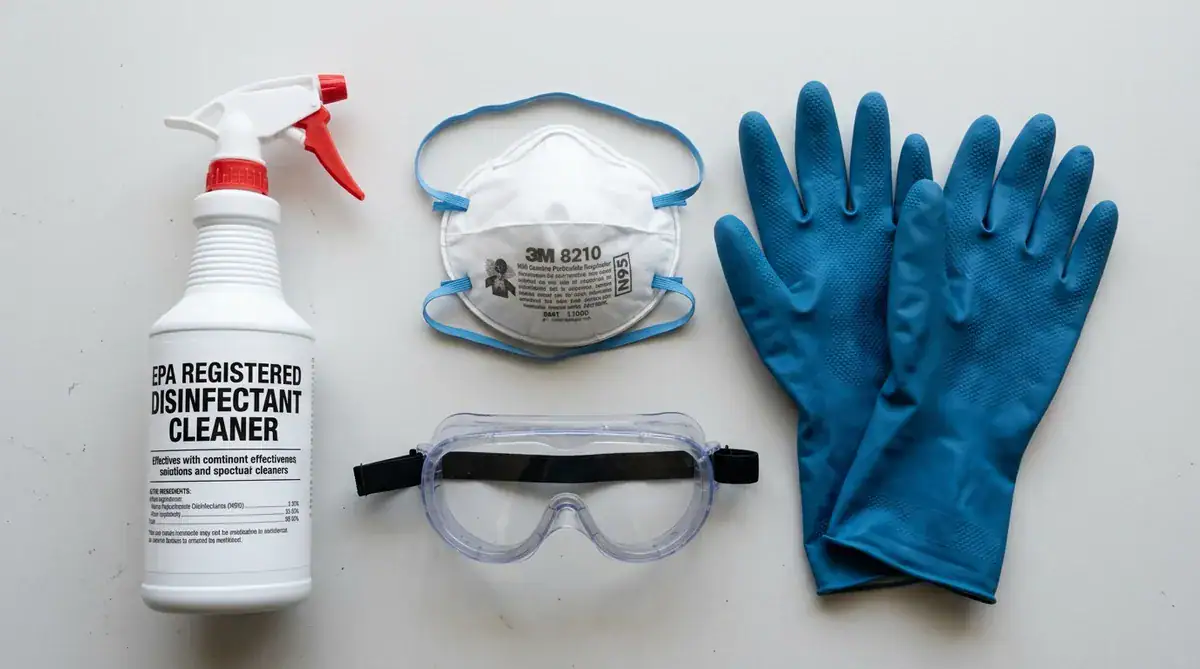
Treat suspected rodent waste cautiously without waiting for certain identification. Avoid dry sweeping or vacuuming, wear rubber or plastic gloves, and wet the waste thoroughly with an appropriate disinfectant for its label contact time. Follow the complete CDC cleanup instructions, including ventilation and disposal steps. Seek qualified help for heavy contamination or evidence in heating or cooling ducts; a disposable mask is not a substitute for that assessment.
Read our complete step-by-step guide: How to Clean Up Mouse Droppings Safely →
Frequently Asked Questions
What do mouse droppings look like?
Small, dark, rice-shaped pellets are a useful visual clue. Arizona Extension gives a 3 to 6 mm reference with pointed ends, but size ranges overlap with lookalikes. Appearance cannot date feces or establish species, animal count or infection. Do not touch or crush them to identify them.
Are mouse droppings dangerous?
Treat all suspected rodent droppings as potentially contaminated. House mice can spread lymphocytic choriomeningitis virus (LCMV); in North America, hantavirus pulmonary syndrome is associated with certain wild rodents, including deer mice. Dropping appearance cannot tell you whether infection is present. Do not sweep or vacuum dry droppings; follow the safe wet-cleanup procedure.
Sources: CDC: house mice and LCM; CDC: rodents that carry HPS-associated hantaviruses.
How many droppings does a mouse produce per day?
Dropping counts cannot reliably estimate the number of mice in a home. Accumulation time, repeated use of a location and previous cleanup all affect what you see. Document locations and new evidence rather than dividing pellets by a supposed daily output.
Evidence behind these decisions
University and CDC guidance support the exclusion and cleanup principles. Manufacturer data verify only the named product specifications and limitations, not testing by this website, a lifespan, or guaranteed exclusion.
References & Scientific Standards:



Alexios Papaioannou is the founder and lead editor of Mice Gone Guide. He oversees research, article review, and content updates focused on mouse prevention, humane control, home proofing, and safety-first household guidance.