
Mice Gone Guide
Best Bait for Mouse Traps: Chunky Peanut Butter, Trigger Setup & Mistakes
Decision table: choose the bait before buying
| Situation | Consider | Limit |
|---|---|---|
| Ordinary snap-trap setup | Small amount of chunky peanut butter | Check allergies; follow the bait-pan instructions.[1] |
| Food damage on a confirmed route | Small fresh portion of the food already being eaten | Do not reuse contaminated food.[2] |
| Nesting motivation | Small amount of cotton wool or dental floss | Not a universal better bait; follow trigger instructions.[2] |
| Live or glue trap shopping | Reconsider the method | CDC advises against these for household control.[1] |
Evidence behind the advice
How we assess options: This is an evidence-based editorial assessment, not hands-on testing. CDC supplies public-health recommendations; UC IPM supplies extension guidance; manufacturer pages support specifications only. Household fit is editorial judgment, not a measured ranking or a guarantee of capture speed, welfare, or safety.
CDC recommends traditional, appropriately sized snap traps, keeping traps and bait away from children and pets, and daily checks. It advises against live and glue traps because frightened rodents may urinate and increase illness risk.[1]
UC IPM supports placing traps near confirmed activity and combining trapping with sanitation and exclusion. It says the best bait is often the food house mice are already eating and advises a small amount on the trigger plate.[2]
Use cases: match evidence, not a universal bait ranking
Pantry food damage: a small fresh portion of the same food can be an editorial bait choice; discard contaminated food rather than using damaged stock. Bait disappears without a catch: check quantity, trigger attachment and route before buying an attractant. Peanut allergy in the home: choose a compatible alternative food with qualified advice as needed; no alternative is universally allergy-safe. UC IPM notes peanut allergy risks and supports matching existing food preferences.[2] These examples are hypothetical, not field trials.
Limitations before choosing a product
No trap is automatically child-proof or pet-proof, and an enclosure is not permission to allow access. We have no comparative kill-time, sensitivity, or capture-rate measurements for the products linked here. Neither a checking interval, a release distance nor an estimated mouse count establishes welfare, legality or successful control. If safe placement, monitoring or handling is not achievable, obtain qualified help.
Implementation: bait, placement and cleanup
Helpful video: practical mouse-control steps
Watch this for a visual overview, then follow the written steps on this page for cleanup, proofing, bait placement, and safety details.

Best bait for mouse traps
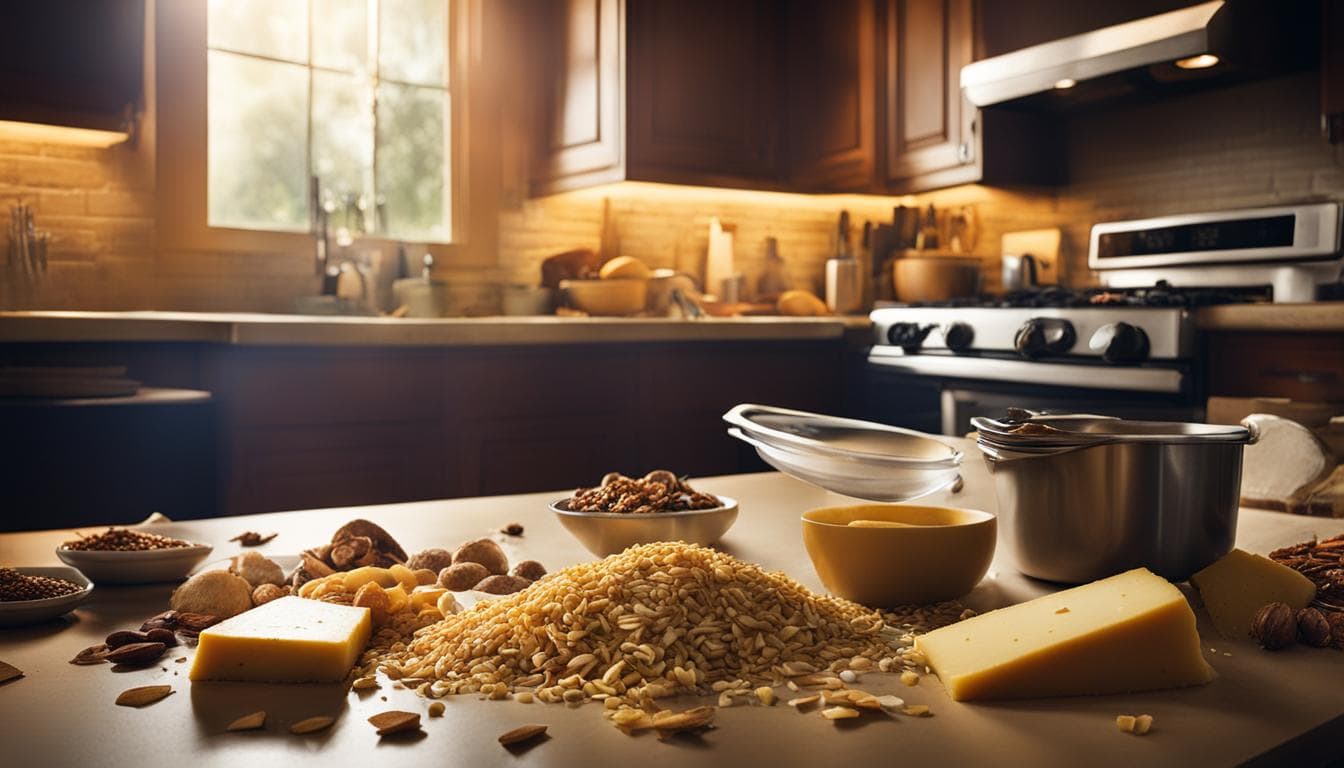
UC IPM identifies peanut butter as a popular bait because it is easy to use and attractive to house mice; it also notes allergy risks.[2] But the best bait is not always the same in every home. If mice are chewing cereal, oats, bird seed, pet food, chocolate, crackers, or nuts, use that clue. The bait should match what they are already investigating.
UC IPM identifies cotton wool or dental floss as possible nesting-material baits, particularly for reproductive females. Use a small amount on the trigger plate and follow the trap instructions.[2] The key is to use very little. A trap overloaded with bait becomes a free feeding station.
Bait ideas by situation
Kitchen or pantry mice
Garage mice
Apartment mice
Trap-shy mice
How much bait to use
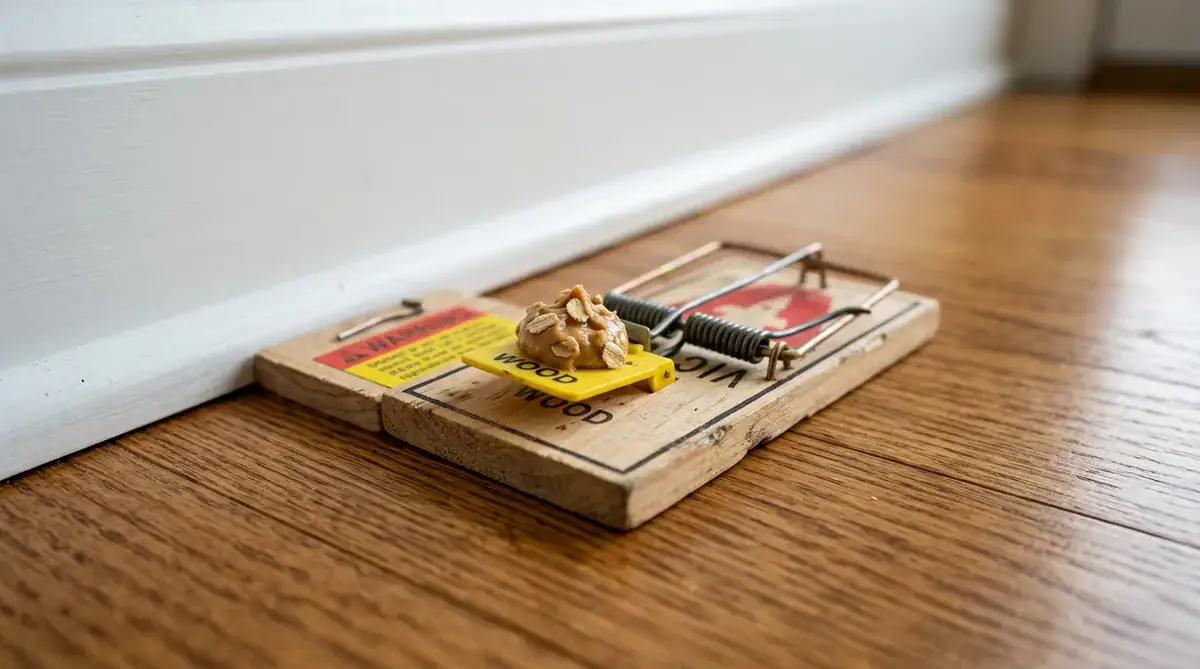
Use a pea-sized amount or less. The bait should force the mouse to work at the trigger. If the mouse can lick or remove the bait from the side without stepping on the trigger, the trap is poorly baited. Smear sticky bait into the trigger cup or use a toothpick to apply a tiny amount. For snap traps, set the trigger facing the wall when placed perpendicular to the wall, or use pairs where mice may jump obstacles.
How to orient baited snap traps (T-placement)
Set each mouse-sized snap trap flush against the wall with the baited trigger end against the baseboard so the trap forms a T with the wall. Check traps daily and keep all traps and bait out of reach of children and pets—no trap is automatically pet-safe. For full room-by-room placement maps, see our dedicated guide on where to place mouse traps.[1]
Why bait fails
Start with route, competing food, bait quantity and trigger setup—not an unsourced cheese-versus-sweets ranking. CDC’s pre-bait advice chiefly addresses cautious rats and says house mice are less cautious; this is not evidence for a mandatory 48-hour mouse pre-baiting routine.[1] UC IPM advises a small amount of bait and notes that nesting materials may be useful for reproductive females.[2]
- Too much bait lets mice steal it.
- Wrong location misses the active route.
- Use enough suitably placed traps to address observed activity; no universal count or result date is established here.[2]
- Food is still available elsewhere, so mice ignore the trap.
- Children, pets, or household traffic force traps into weak locations.
- Droppings were cleaned away before the active route was mapped.
Why CDC advises against live traps and glue traps
The CDC advises against using live traps or glue traps because caught rodents become stressed and may urinate, increasing household exposure to rodent-borne diseases. Use mouse-sized snap traps baited with chunky peanut butter instead.
Trap bait around children and pets
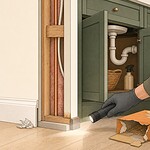
Do not place open snap traps where a child, dog, cat, or non-target animal can contact them. Use protected locations behind appliances only when truly inaccessible, or choose enclosed devices designed to reduce access risk. Never use rodenticide bait casually. If poison bait is used, follow the label exactly and use tamper-resistant bait stations as required. For many homes, trapping is preferred because it avoids dead mouse odor inside walls and does not rely on toxic bait.
What to do after a catch
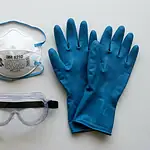
Wear gloves. Treat dead rodents and traps as contaminated. Disinfect before handling reusable traps, bag waste safely, and wash hands. Then reset traps until activity stops. One catch does not prove the infestation is over. Continue food control, entry-point sealing, and monitoring for new droppings.[4]
Hypothetical household examples for mouse trap bait
A useful way to assess a mouse problem is to start with the strongest evidence rather than assume the entire house has the same conditions. Start with the room or surface where the evidence appears, then decide whether the priority is identification, cleanup, trapping, sealing, or prevention. The same evidence can mean different things in a kitchen, garage, wall void, apartment, or storage area.
Mouse eating cereal
Mouse in garage
Trap bait stolen
Mice around pets
Use this table before buying anything. A trap helps only when there is active mouse travel. A disinfectant helps only after contaminated material is wetted and wiped safely. Sealing material helps only when the gap is correctly identified and the repair does not block required ventilation, drainage, combustion air, or access for utilities.
Final checklist before you act
- Keep children, pets, and unnecessary people away from contaminated or trapped areas.
- Photograph droppings, gnaw marks, nests, rub marks, food damage, or possible entry holes before cleaning or sealing.
- Remove food access first: pet food, bird seed, pantry spills, trash, snacks, and cardboard clutter.
- Place traps only on confirmed active routes and only where they can be used safely.
- Wet droppings and nesting material with disinfectant before wiping or disposal.[4]
- Seal gaps with durable, chew-resistant materials after active routes are controlled.
- Continue checking the same locations for new evidence; a fixed number of quiet days does not guarantee that the home is clear.
The core principle for best bait for mouse traps is simple: identify the strongest evidence, choose the safest next step, close the cause of the problem, and monitor for new activity. That sequence is more useful than a miracle claim and safer than relying on a single product.
Product verification and shopping limits
Product specifications and unverified shopping links
Affiliate disclosure: as an Amazon Associate, Mice Gone Guide may earn from qualifying purchases. Product availability, packaging, sellers, and labels can change. Check the current listing and product label before buying or using anything around children, pets, food, or contaminated areas.

Victor Metal Pedal Wooden Mouse Traps, 20 Pack
Verification scope: Victor confirms the wooden-base, metal-pedal trap family. Its retrieved page is CM150 in 2- or 12-trap sizes, so this existing 20-pack Amazon listing is not an independently verified SKU or bundle.[3]
Best for: Placing several traps along active wall routes, behind appliances, and near droppings where children and pets cannot reach them.
Avoid if: Avoid open snap traps in accessible areas with children, pets, or non-target animals.
Check current price on Amazon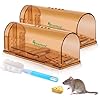
CaptSure 2-Pack Humane Live-Catch Mouse Traps
Best for: Not recommended for household control by CDC. The existing CaptSure link and image are retained for continuity, not as an endorsed humane or safe option.[1]
Avoid if: CDC advises against live traps; monitoring alone does not establish welfare or lawful release. Exact CaptSure model, seller claims and package contents have not been verified here.[1]
View existing listing (not endorsed)
Heavy-Duty Nitrile Disposable Gloves
Verification limit: Exact brand, thickness and compatibility with your disinfectant are not verified. CDC specifies rubber or plastic gloves for routine cleanup; this listing is not a certified protective-equipment recommendation.[4]
Best for: Reducing direct hand contact while wiping droppings, bagging disposable towels, and handling contaminated liners.
Avoid if: Do not reuse disposable gloves after cleanup or touch clean surfaces with contaminated gloves.
Check current price on AmazonFrequently asked questions
Why is my mouse trap not catching anything even with bait?
Check placement, bait quantity, trigger setup and competing food first. CDC discusses pre-baiting mainly for cautious rats and says house mice are less cautious; it does not establish a universal two-day pre-bait rule for mice.[1][2]
What is the best bait for mouse traps?
CDC describes chunky peanut butter or mutton fat as snap-trap baits. UC IPM says the best bait is often the food house mice are already eating and notes peanut allergy risks. Use a small amount that suits the trap instructions, not a universal ranked bait list.[1][2]
How much bait should I use on a mouse trap?
CDC’s prevention brochure describes a pea-sized amount on a snap-trap bait pan. UC IPM advises using a small amount on the trigger plate because too much may be removed without triggering the trap. Follow the model instructions.[5][2]
Where should I put baited mouse traps?
Place traps along walls, behind appliances, in corners, behind objects, and near droppings or gnaw marks. Do not place traps randomly in the open center of a room.
Can mice learn to avoid traps?
A missed catch does not by itself establish learned avoidance. Check the active route, bait quantity and trigger setup. CDC says house mice are less cautious than rats; this page does not prescribe a generic pre-baiting period.[1][2]
Is bait safe around pets and children?
Keep every trap and bait inaccessible to children, pets and non-target animals. An enclosed mechanism does not establish that access is safe. Check food allergy constraints as well as the trap instructions.[1][2]
More practical questions readers ask
What should I do tonight if I cannot finish the whole job?
Do the safest reversible actions first. Move exposed food into rigid containers, keep children and pets away from contaminated areas, photograph evidence, place traps only where they can be used safely, and avoid dry cleanup. Do not start demolition, roof work, wall cutting, heavy contamination cleanup, or rodenticide use when you are tired or unsure.
What should I track after taking action?
Track the date, room, evidence type, cleanup completed, traps placed, catches, sealed gaps, and new signs. Simple notes prevent repeated guessing. New material in a documented, safely cleaned location warrants investigation; it does not alone establish species, population or a particular active route. If traps are untouched but food damage continues, placement may be wrong or competing food remains.
What should happen after this step?
Every mouse problem has connected parts: signs, active removal, safe cleanup, exclusion, prevention, and monitoring. After the immediate problem is handled, check the related step that closes the loop. Droppings need cleanup and active control. Traps need food control and placement. Sealing needs monitoring. Prevention needs monthly checks.
What should I avoid believing?
Avoid guaranteed timelines, miracle repellents, fake testing claims, and one-product solutions. Mice are controlled by reducing access to food and shelter, trapping or otherwise controlling active animals, cleaning contamination safely, sealing entries, and verifying that new signs stop.
When should I stop DIY and call a professional?
Call a qualified professional for repeated activity after correct DIY steps, heavy droppings, contaminated insulation, HVAC contamination, inaccessible wall or attic activity, dead-rodent odor, wiring damage, or health-risk occupants. Professional help is also appropriate when you cannot place traps, clean waste, or seal gaps safely.
Primary sources used for this assessment
- [1] CDC: How to Trap Up to Remove Rodents
- [2] UC IPM: House Mouse Pest Notes
- [3] Victor: Metal Pedal Mouse Trap (manufacturer specifications)
- [4] CDC: How to Clean Up After Rodents
- [5] CDC: You Can Prevent Hantavirus brochure
Manufacturer specifications are not independent performance or welfare validation. Existing reference links below are retained for continuity; the numbered sources above support this revision.
Sources and safety references
- CDC: How to Clean Up After Rodents
- CDC: Hantavirus Prevention
- UC IPM: House Mouse Pest Notes
- EPA: Controlling Rodents and Regulating Rodenticides
This page is educational information for ordinary homes. It is not medical, legal, pesticide-label, or professional remediation advice. Follow product labels, local rules, and professional guidance for high-risk conditions.


Alexios Papaioannou is the founder and lead editor of Mice Gone Guide. He oversees research, article review, and content updates focused on mouse prevention, humane control, home proofing, and safety-first household guidance.