
How to Get Rid of Mice in Your Car Safely
Mice can damage vehicles. Inspect safely and seek qualified help for wiring, ventilation-system contamination, or inaccessible nests.
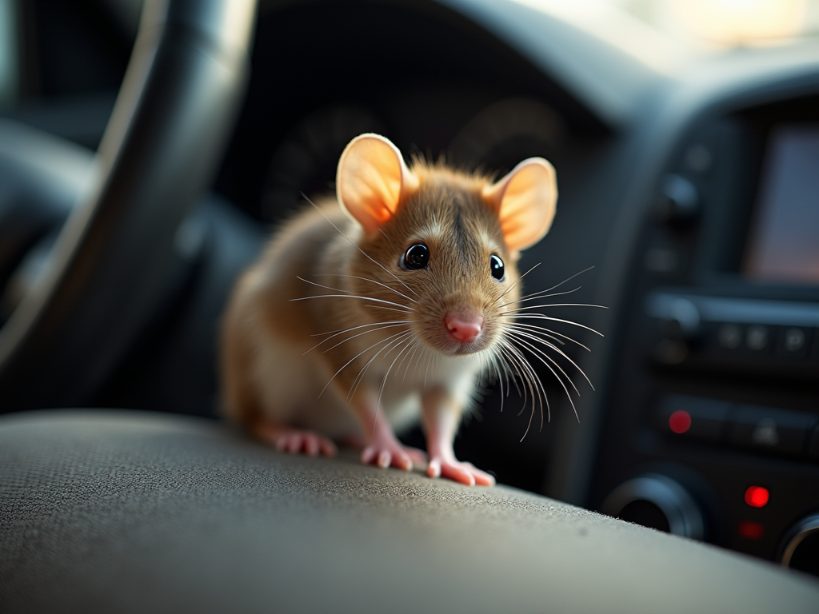
Direct Answer: What to Do When Mice Enter Your Vehicle
Do not disconnect batteries or dismantle vehicle systems based on this guide. Follow the vehicle manual and use a qualified mechanic when electrical or intake work is needed.
Vehicles can offer rodents shelter. This guide provides an accessible owner-inspection checklist and prevention steps; it cannot diagnose damage or contamination from symptoms.
In This Vehicle Rodent Guide:
- Vehicle Mouse Scenarios: Cabin vs Engine Bay vs Stored Vehicle
- Interactive Vehicle Inspection Checklist
- Owner Inspection Checklist (Before Starting an Idle Car)
- Safe Vehicle Cleanup Sequence
- Engine Bay, Wiring & Air Intake: When to Call a Mechanic
- Video Guide: Keeping Mice Out of Car Engine Bays
- Stored and Idle Vehicle Prevention Strategy
- Frequently Asked Questions
Vehicle Mouse Scenarios: Cabin vs Engine Bay vs Stored Vehicle
| Scenario | Typical Evidence | Safe Immediate Move |
|---|---|---|
| Cabin / Glove Box Droppings | Droppings under seats, chewed paper in glove compartment. | Air car out 20 min; wet-clean hard plastics; do not vacuum dry. |
| Cabin Air Filter / HVAC Smells | Musty ammonia or dead-mouse smell when AC blower turns on. | Ask a qualified mechanic to inspect suspected HVAC contamination or blockage. |
| Engine Bay Nesting Material | Acorns, leaves, chewed hood insulation near battery tray. | Photograph from a safe distance; use qualified help for nests around electrical or intake systems. |
| Dashboard Warning Lights / No-Start | Check-engine, ABS, airbag lights or blown fuses. | Do not attempt DIY wire splicing; ask a mechanic whether towing is needed before driving. |

Owner Inspection Checklist (Before Starting an Idle Car)
Work through this checklist before turning the ignition key on a stored or infrequently used car:
- [ ] Engine Cowl & Air Intake: Check exterior windshield cowl for dried leaves, seeds, or shredded twigs.
- [ ] Engine Air Filter Box: Follow the vehicle manual for safely accessible inspection points. Ask a qualified mechanic to inspect suspected intake blockage or contamination; do not dismantle systems based on this checklist.
- [ ] Battery Tray: Check behind and beneath battery for droppings and nesting material.
- [ ] Wiring Harnesses: Visually inspect main wiring bundles for shredded loom tape or exposed copper.
- [ ] Cabin Air Filter: Follow the vehicle manual and use a qualified mechanic for suspected filter, blower, or duct contamination.
Safe Vehicle Cleanup Sequence
- Air out vehicle: In a well-ventilated space, open the hood, vehicle doors, and trunk to air out the interior and engine compartment for 20 minutes before cleanup, as described in the CDC vehicle guidance below.
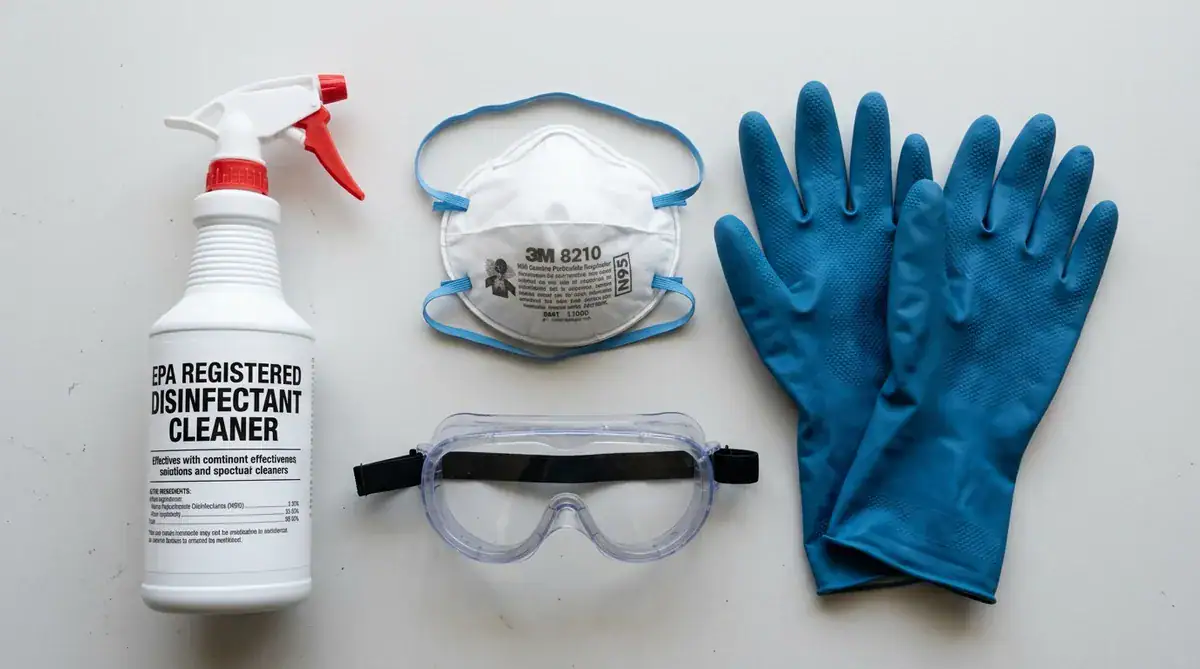
- Wear gloves: Put on rubber or nitrile gloves. Do not touch your steering wheel or phone with contaminated gloves.
- Wet visible contamination: Wearing gloves, fully soak waste on accessible hard surfaces with a compatible disinfectant. Let sit for 5 minutes or according to the disinfectant label. Never dry vacuum! Do not spray HVAC ducts or electrical components; use qualified help for these areas.
- Wipe and double-bag: Lift softened droppings with disposable paper towels. Double-bag all waste.
- Clean carpets & upholstery: For cloth seats, use a commercial hot-water upholstery shampooer or steam cleaner after surface debris is safely removed.
Video Guide: Keeping Mice Out of Car Engine Bays
Watch automotive technicians explain why rodents attack modern vehicles and how to protect your engine bay from costly wiring damage:
Engine Bay, Wiring & Air Intake: When to Call a Mechanic
Rodents can gnaw automotive wiring regardless of its insulation formulation. Do not drive with visible wiring damage; ask a qualified mechanic to assess repairs and safe operation.
Stored and Idle Vehicle Prevention Strategy
- Remove all cabin food: Clean out gum wrappers, pet treats, fast food bags, and emergency snacks.
- Park on clean concrete: Park away from tall grass, wood piles, and compost bins.
- Regular use does not guarantee prevention. Inspect stored vehicles safely before starting and monitor for physical evidence.
- Perimeter trapping: Set mechanical snap traps along garage walls around the vehicle to intercept mice before they climb your tires. See best mouse traps for homes.
How to Keep Mice Out of Your Car Long-Term
Removing the mice is half the job — here is how to keep mice out of your car with continuing inspection:
- Remove the attractants first: no snacks, napkins, or pet food in the cabin; store the car away from bird feeders and trash cans.
- Block the entry points: parking in a garage? Seal garage door gaps and stuff copper mesh around any wall penetrations — mice climb engines from below.
- Do not rely on peppermint sachets or engine-bay repellents to prevent nesting. Remove accessible food, inspect safe areas, and control confirmed garage routes.
- Inspect stored vehicles before starting: regular driving or a cover does not guarantee rodent prevention. Seek qualified help for wiring damage or blocked intakes. Do not put loose poison bait in a vehicle; any pesticide use must follow its label and local requirements.
Do the same parking spot checks every month: droppings on the engine cover, shredded insulation, or chewed wire loom are the early warnings covered in our signs of mice infestation guide.
Frequently Asked Questions
Can mice damage car wiring?
Yes. Rodents can gnaw vehicle wiring. Repair scope and cost depend on actual damage; have a qualified mechanic inspect it.
Can I vacuum mouse droppings from my car?
No. Do not dry vacuum rodent waste. Use the wet-cleanup guide for accessible surfaces, and seek qualified help for HVAC or electrical contamination; waste does not establish whether a pathogen is present. Use the disinfectant label contact time.
Will peppermint oil keep mice out of my car?
Do not rely on peppermint oil for vehicle protection. Inspect for physical evidence, remove food access, and use safe garage control and qualified repair when needed.
Cleanup reference: CDC How to Clean Up After Rodents. Use wet cleanup with gloves and product-label contact time for accessible surfaces; seek qualified help for HVAC, electrical systems, or heavy contamination and appropriate respiratory protection.




Alexios Papaioannou is the founder and lead editor of Mice Gone Guide. He oversees research, article review, and content updates focused on mouse prevention, humane control, home proofing, and safety-first household guidance.