
Trap Selection & Density Guide
Best Mouse Traps for Homes: Snap Traps, Enclosed Options & Safety Limits
Direct Answer: Choosing the Right Mouse Trap
For ordinary household control, start with an appropriately sized snap trap placed on a confirmed active route, out of reach of children and pets, and checked daily.[1] For most accessible indoor infestations, properly positioned mechanical snap traps are the primary evidence-backed tool recommended by public health authorities. Enclosed and electronic traps provide pet and child safety trade-offs. No trap replaces food sanitation, safe cleanup, and gnaw-proof entry exclusion.
Selection Matrix: Choose by Household Situation
| Household Situation | Recommended Trap Category | Primary Advantage | Critical Limit |
|---|---|---|---|
| Kitchen / Pantry Runways | Mouse-sized snap traps (standard or enclosed) | CDC recommends correctly sized snap traps; no result timeline is guaranteed. | Must be shielded from toddlers and pets. |
| Homes with Dogs or Cats | Enclosed Tunnel Snap Traps | Housing can reduce access, but the trap must still be secured away from children and pets. | Requires route alignment; bulkier profile. |
| Garages & Outbuildings | Mouse-sized snap traps in suitable protected positions | Can be positioned on confirmed, safely accessible travel routes. | Check daily and follow the product instructions for the setting. |
| Rental Apartments | Enclosed snap traps in accessible, protected positions | A housing can limit direct access; it does not eliminate handling or contamination risks. | Does not replace landlord structural exclusion. |
| Strict No-Kill Preference | Qualified advice before considering live capture | A checking interval does not guarantee survival or welfare. | CDC discourages due to urine exposure risk. |
Evidence behind the advice
How we assess options: This is an evidence-based editorial assessment, not hands-on testing. CDC supplies public-health recommendations; UC IPM supplies extension guidance; manufacturer pages support specifications only. Household fit is editorial judgment, not a measured ranking or a guarantee of capture speed, welfare, or safety.
CDC recommends traditional, appropriately sized snap traps, keeping traps and bait away from children and pets, and daily checks. It advises against live and glue traps because frightened rodents may urinate and increase illness risk.[1]
UC IPM supports placing traps near confirmed activity and combining trapping with sanitation and exclusion. It says the best bait is often the food house mice are already eating and advises a small amount on the trigger plate.[2]
Household use cases
Accessible indoor route: consider a mouse-sized snap trap only in an inaccessible placement. Pets or young children: evaluate whether a housing and secured placement actually prevent access; do not rely on marketing alone. Inaccessible wall or attic activity: a different consumer trap does not solve the access problem; seek qualified inspection. These are situational editorial choices, not product performance tests.
Limitations before choosing a product
No trap is automatically child-proof or pet-proof, and an enclosure is not permission to allow access. We have no comparative kill-time, sensitivity, or capture-rate measurements for the products linked here. Neither a checking interval, a release distance nor an estimated mouse count establishes welfare, legality or successful control. If safe placement, monitoring or handling is not achievable, obtain qualified help.
Implementation: route, setup and inspection

papalex-20 at zero extra cost to you. We never fabricate test ratings or customer counts.
In This Mouse Trap Guide:
- Route Before Product: The 5-Question Check
- Trap selection and placement checklist
- Selection Matrix: Choose by Household Situation
- Trap Category Matrix: Trade-Offs Before You Buy
- Placement: The Variable That Matters Most
- Video Guide: Setting Snap Traps Safely
- Safety Around Children, Pets, and Food Areas
- Critical Mistakes to Avoid
- Frequently Asked Questions
Route Before Product: The 5-Question Check
Before purchasing any trap model, answer these five practical questions:
- Where is the mouse actually traveling? Traps must be placed on verified runways marked by droppings, rub marks, or cabinet gnawing—never randomly in open rooms.
- Who can physically reach the device? Check line-of-sight and floor access from a toddler’s or pet’s physical perspective.
- How often can you check the device? Check snap traps daily. The CDC advises against live traps and glue traps because stressed rodents may urinate and increase disease exposure.[1]
- What happens after a capture? You need a safe disposal protocol using CDC wet-cleaning standards.
- Is a consumer trap the right solution? If mice are in deep wall cavities or contaminated attic insulation, exclusion and professional inspection may be necessary.
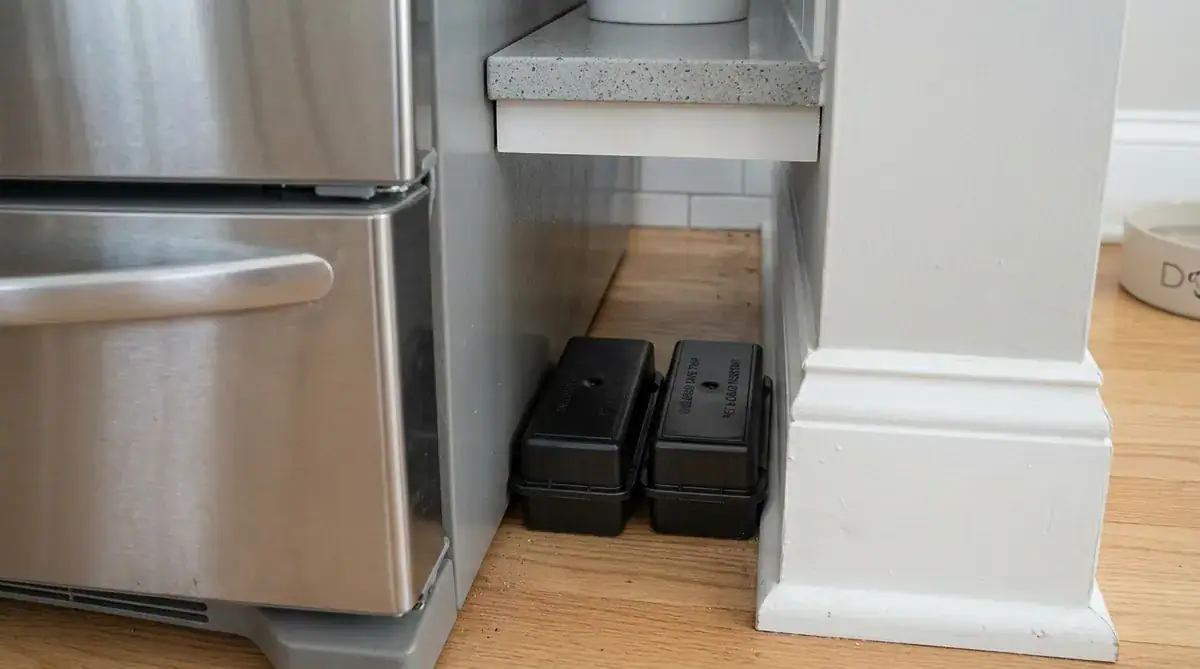
Trap Category Matrix: Trade-Offs Before You Buy
| Trap Type | Lethality & Speed | Maintenance Needs | Safety Profile |
|---|---|---|---|
| Standard Snap Trap | Designed to kill mechanically; functioning and outcomes depend on the device and placement. | Check daily; follow the product and CDC cleaning/disposal instructions before reuse. | Exposed spring; hazard for toddlers/pets. |
| Enclosed Snap Trap | Mechanical strike within a housing; no universal kill-time claim is established here. | Check daily; handling and reset requirements vary by model. | Shielded striker bar, but no trap is automatically pet-safe; keep out of reach. |
| Electronic Trap | Uses an electrical mechanism; operating conditions vary by model. | Follow the specific power, moisture, cleaning and placement instructions. | Safety features vary; do not assume any device is child-proof or pet-proof. |
| Live Catch Trap | Intended to hold an animal alive; survival and welfare are not guaranteed. | Monitoring, handling and lawful disposition require specific professional and product guidance. | Handling a live rodent carries bite and contamination risks. |
| Glue Boards | Can prolong confinement and expose people or non-target animals to harm. | Non-target capture and handling require particular caution; CDC advises against use. | Not recommended. CDC advises against glue traps. |
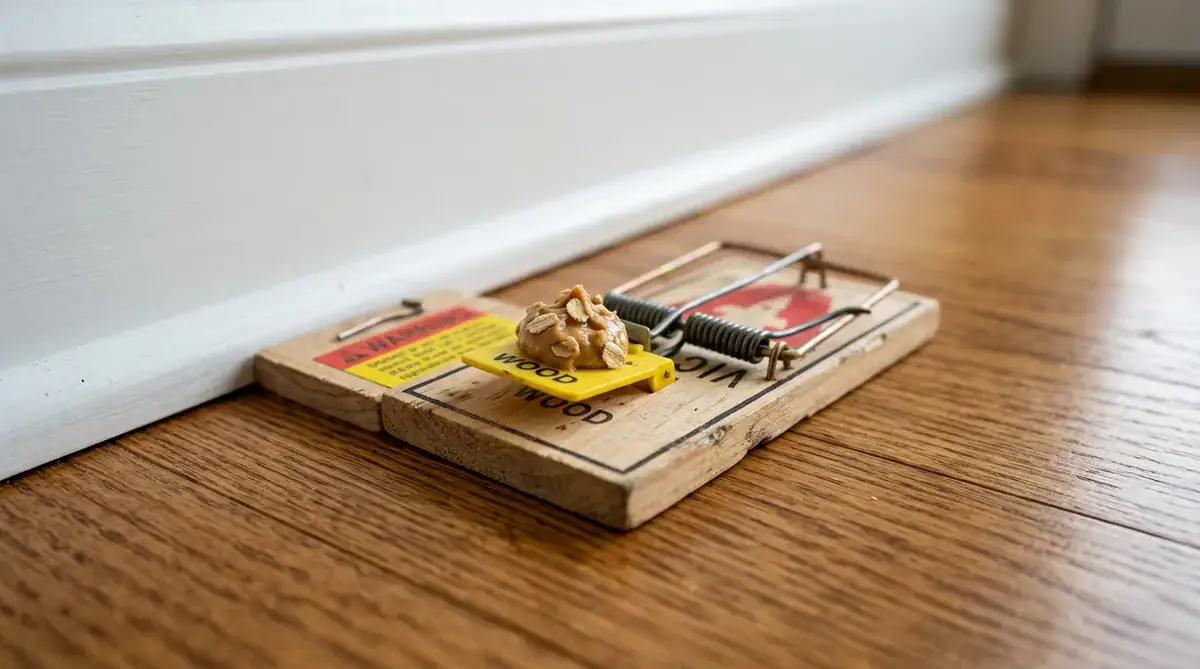
Snap Trap Setup Summary & Room Placement Handoff
Put a small amount of chunky peanut butter on the bait pan, set the mouse-sized snap trap against the wall, and put the baited end against the wall so it forms a T (CDC Trap Up). Check traps daily, and keep all traps and bait out of reach of children and pets—no trap is automatically pet-safe. For our complete room-by-room placement map, read where to place mouse traps.
Video Guide: Setting Snap Traps Safely
This existing video illustrates setup; it is not our test evidence or a guarantee against injury. Follow the specific product instructions and keep fingers clear of the mechanism.
Safety Around Children, Pets, and Food Areas
The CDC explicitly advises keeping rodent control devices out of reach of children and pets. In family living areas:
- Consider protected placements only when children and pets genuinely cannot reach them; a cabinet or appliance alone does not establish inaccessibility.[1]
- Never set open snap traps in open hallway floor space.
- Do not scatter loose rodenticide bait; all rodenticides carry non-target exposure risks. Follow the legally approved label and obtain qualified advice when needed.[2]
- For contaminated traps or rodent waste, CDC advises rubber or plastic gloves and wet disinfection; gloves do not make a trap bite-proof or eliminate exposure risks.[4]
Critical Mistakes to Avoid
- ❌ Buying by an arbitrary trap count: Match placements to confirmed activity and safe access constraints; no universal room-count or floor-area formula applies.[2]
- ❌ Placing traps parallel in open rooms: Placement should follow observed activity and manufacturer instructions, rather than arbitrary open-room locations.[1]
- ❌ Using glue traps: CDC advises against glue traps; consult public health agencies.
- ❌ Neglecting entry point sealing: Trapping without exclusion creates a revolving-door infestation. Seal holes with copper mesh and caulk.
Product verification and shopping limits
Practical next steps · September 17, 2026
Choose the trap type before choosing a product
Start with who can reach the device, where mice travel and whether you can check it. Only the existing Victor snap-trap shopping link is retained here. Manufacturer-family specifications are verified; the exact marketplace bundle is not. Other categories are explanations, not verified shopping recommendations.
Affiliate disclosure: As an Amazon Associate I earn from qualifying purchases. Only the named product below has an Amazon purchase link.

Open snap traps: Victor M156-20
The existing shopping link is labeled Victor M156-20, a 20-trap bundle. Victor’s retrieved manufacturer page confirms the wooden-base, metal-pedal trap family, but shows model CM150 and 2- or 12-trap sizes—not this exact seller bundle. Exact M156-20/ASIN identity, package count, availability and seller are not independently verified in this review.[3] A multi-pack can cover separate active routes; owning 20 traps does not mean every room needs 20.
Skip if children or pets can reach the placement. These are exposed snap traps. Use only inaccessible locations and follow the product’s setting instructions. Check traps daily.
Check options on Amazon →Enclosed snap traps
Consider a shielded mechanism when accidental contact is a concern. An enclosure is not automatically childproof or petproof; check its design and still keep it inaccessible. No product link until a specific listing is verified.
Electronic traps
For readers who prefer a powered capture chamber and can maintain the batteries and cleaning routine. Check location restrictions and keep away from children and pets. No claim of better performance—and no unverified ASIN link.
Live-catch traps
Read the live-catch and humane-trap guide before choosing this route. Frequent checks, welfare, lawful release and exposure to stressed rodents all matter. CDC advises against live traps because frightened mice can urinate, increasing exposure risk.[1]
Bait stations
A rodenticide bait station is not a mechanical trap. It introduces poison, disposal and non-target exposure considerations. Use only a legally approved, labeled product suited to the household; seek professional advice when unsure. No bait-station product link is included.
Before setting: Choose and place bait correctly →
After the catch: Use the wet cleanup method →
Seal entry points and prevent repeat activity →
Frequently Asked Questions
What is the best mouse trap for a home?
CDC recommends traditional, correctly sized snap traps for household rodent control. Choose by confirmed activity, safe placement and ability to check daily; no particular brand is established here as universally best.[1]
Are enclosed mouse traps safer for homes with pets?
A housing may limit direct access to a mechanism, but it does not make a device pet-proof or child-proof. Keep traps and bait inaccessible and follow the specific instructions.[1]
Do electronic mouse traps work better than snap traps?
UC IPM describes electrocution traps as considerably more expensive than other traps, but this page has no controlled comparative performance data. Check the particular model’s instructions, power requirements and location restrictions; we do not claim superior capture or kill speed.[2]
Where should I put mouse traps?
Place mouse-sized snap traps on confirmed activity routes in protected, inaccessible locations. CDC describes the baited end against the wall to form a T; check daily and follow the trap instructions.[1]
Primary sources used for this assessment
- [1] CDC: How to Trap Up to Remove Rodents
- [2] UC IPM: House Mouse Pest Notes
- [3] Victor: Metal Pedal Mouse Trap (manufacturer specifications)
- [4] CDC: How to Clean Up After Rodents
Manufacturer specifications are not independent performance or welfare validation. Existing reference links below are retained for continuity; the numbered sources above support this revision.
References & Scientific Standards:




Alexios Papaioannou is the founder and lead editor of Mice Gone Guide. He oversees research, article review, and content updates focused on mouse prevention, humane control, home proofing, and safety-first household guidance.