
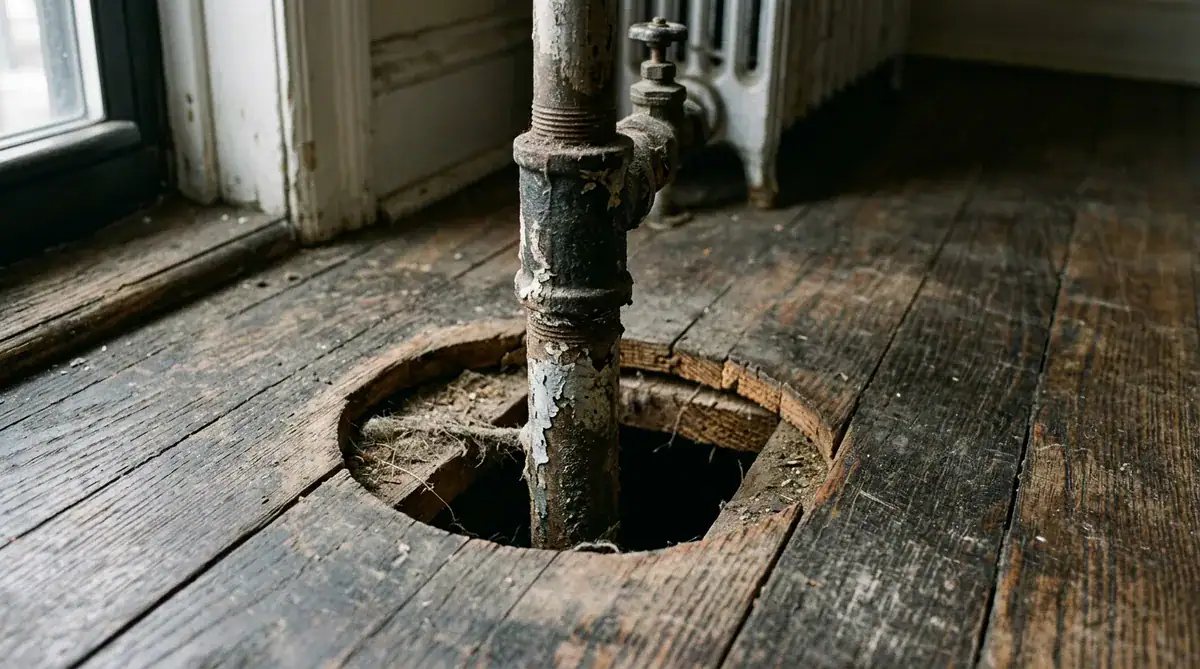
Yes — mice climb walls, and they climb nearly anything with texture. House mice scale brick, stucco, wood siding, paneling, wallpaper, tree bark, fabric, insulated cables, vinyl with a wood back, and interior painted drywall if it is rough enough to grip. The question is never “can mice climb walls” — it is “which of my walls give them purchase, and how do I deny it.”
What mice can and cannot climb
Mice have claws suited for gripping micro-texture, a low body weight and an exceptional power-to-weight ratio. Rough, porous or fibrous surfaces are easy ladders. What slows them down: smooth, hard, continuous surfaces — glass, polished metal, smooth tile and smooth plastic pipe offer far less grip than rough surfaces. Mice can still get around them by jumping from furniture or shelves, or by using a nearby rough surface, cable or plant.
Vertical performance (the numbers)
- Climbing: house mice can run up any rough vertical surface and along wire cables or ropes.
- Jumping: up to about 12 inches (30 cm) from the floor onto a flat surface.
- Gaps: house mice can squeeze under gaps about ¼ inch (6 mm) tall and through openings about 3/8 inch (10 mm) wide.
Why this matters inside your home
Most people seal ground-level gaps and stop. But mice that climb walls exploit second-story entry points: the gap where the roofline meets siding, attic vents, soffits, and the utility penetrations on upper floors. If they are already inside, they travel inside wall cavities, which is why you hear scratching at night. Our mice in the attic guide covers the upper-floor entry pattern in detail.
How to stop wall-climbing mice
- Deny the texture route: thin or remove vegetation and ivy growing against exterior walls, since house mice are excellent climbers.
- Guard the vertical lines: where a downspout, cable or utility line runs up to a gap or vent, seal or screen that opening — the line itself is an easy climbing route.
- Seal the upper envelope: soffit gaps, roofline junctions and attic vents — seal gaps larger than ¼ inch with coarse steel wool or copper mesh plus sealant, or cover vents and larger openings with hardware cloth (see steel wool vs copper mesh).
- Remove the launch pads: store firewood, bins and furniture away from walls — mice use them as jump platforms.
- Do the full proofing pass: the mouse-proofing guide walks the entire envelope, ground floor to roof.
Can mice climb walls: quick answers

Can mice climb up interior walls?
Yes, when the surface gives them grip — rough paint, wallpaper, paneling, brick or exposed insulation. Very smooth finishes are much harder to climb, but mice can jump from nearby furniture to reach the same places.
Can mice climb glass or metal?
Smooth glass and polished metal offer very little grip, so they are far harder to climb than rough surfaces. Mice can still get past them by jumping or by climbing a nearby rough surface, cable or plant.
How high can a mouse climb?
As high as a rough surface continues. Because house mice can run up any rough vertical surface, a textured exterior wall can lead them to roofline gaps, soffits and vents.
Do mice climb beds?
Yes, via bed frame legs, bedding that touches the floor, or a jump. Keeping the bed away from walls and furniture can reduce some routes, but does not prove mice cannot reach it.
Source for the climbing, jumping and gap figures: UC IPM: House Mouse. For a full removal-first sequence, see the mouse removal hub.



Alexios Papaioannou is the founder and lead editor of Mice Gone Guide. He oversees research, article review, and content updates focused on mouse prevention, humane control, home proofing, and safety-first household guidance.