
Mice Gone Guide
Snap Traps for Mice: How to Set, Place & Use Them Safely
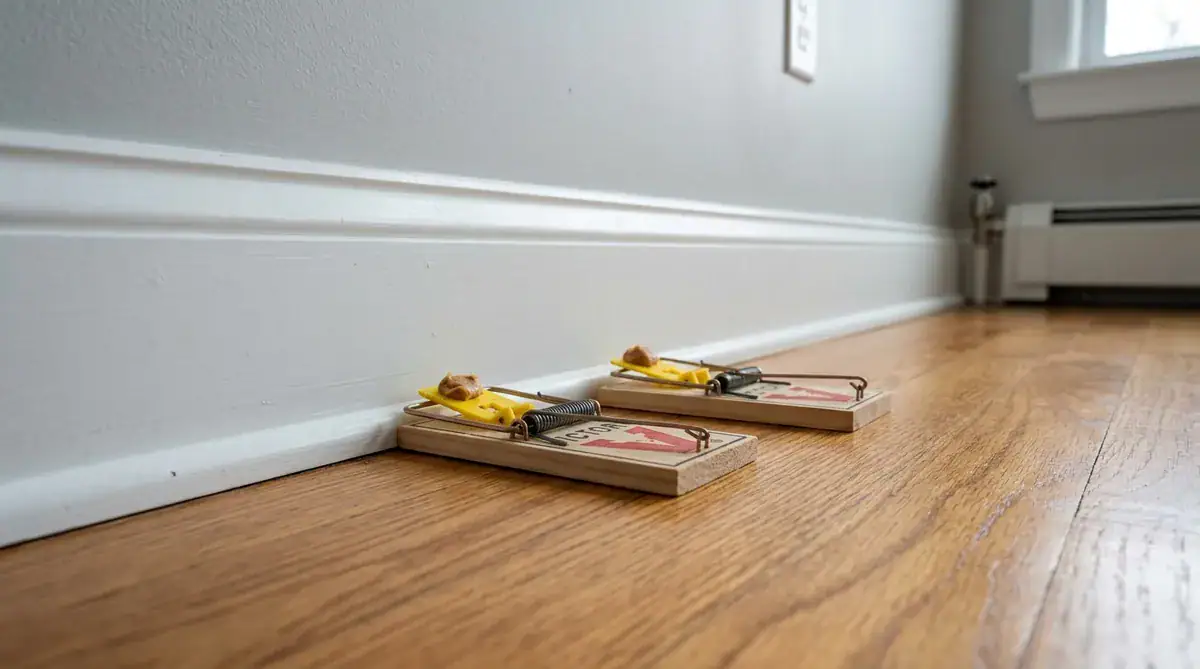
Short answer: A snap trap is a spring-loaded device that kills a mouse quickly when it steps on the trigger to reach bait. It works best when you set several traps in pairs along the wall routes mice already use, with the trigger facing the baseboard, and check them daily. The National Park Service calls snap traps the most effective indoor rodent-trapping method and the safest option for people and non-target wildlife when placed out of reach.
Why snap traps work
Mice travel along walls, baseboards, and the edges of cabinets rather than across open floor space. A snap trap placed directly on one of those runways intercepts a path the mouse is already committed to, which is why correct placement matters more than the brand of trap you buy.
Compared with the main alternatives, snap traps have three practical advantages:
- They kill quickly. A well-set snap trap kills on impact, so the mouse does not suffer a slow death the way it can with some poisons or glue boards.
- You see the result. Unlike poison, where a mouse can die inside a wall, a snap trap leaves the carcass where you can find and remove it.
- No rodenticide risk. There is no anticoagulant bait that could reach a child, a pet, or a bird of prey that eats a poisoned mouse.
The CDC lists traditional snap traps as a recommended trap type for reducing rodent populations around the home and advises that poison or bait stations are not the first choice for most accessible indoor problems.
How to set a snap trap
Setting a wooden snap trap takes a few seconds once you know the parts: a wooden or plastic base, a spring-loaded metal bow (the kill bar), a bait pedal or trigger, and a locking bar that holds the bow under tension.
- Stabilize the base. Hold the wooden base firmly in one hand or press it flat against the floor so it cannot shift while you set it.
- Pull the bow back. Carefully pull the spring-loaded bow up and over to the opposite side of the base, against the spring tension.
- Lock it. While holding the bow down, place the locking bar over the bow and secure it in the small metal loop or catch provided.
- Add bait last. Put a pea-sized amount of bait on the trigger or in the trap recess before you position the trap, so your fingers are not near a set trigger.
Safety note: A set snap trap can snap hard enough to bruise a finger. Keep your fingers clear of the bow path while setting, and set traps only where children and pets cannot reach them.
Where to place snap traps
Placement decides whether a snap trap catches anything. The guidance below follows the National Park Service and UC Agriculture and Natural Resources.
- Set traps along walls and runways. Place them on a wall line, fence line, or another linear surface such as the edge of a cabinet or planter, where you see droppings, gnaw marks, or greasy rub marks.
- Point the trigger at the wall. The bait pedal side should face the baseboard so a mouse hugging the wall runs straight into the trigger. Do not leave the trigger facing open floor space.
- Use pairs. Place two traps right next to each other, triggers against the wall, to cover the runway from both directions. A double set raises your chance of a catch.
- Use enough traps. For an active or older infestation, the NPS recommends ten traps per 12-by-12-foot area or more. A single trap in a large room rarely solves the problem.
- Target entry points. Set traps in confirmed runways and at likely points of entry, such as gaps around pipes, vents, and doors.
Leave traps set in inconspicuous spots along walls and check them periodically. If a building will be closed for winter, set extra traps as part of winterizing so you catch mice before they settle in.
Baiting snap traps
A correctly placed snap trap does not strictly need bait, but bait helps attract wary mice to the trigger.
- Use a pea-sized amount or less. Too much bait lets a mouse eat without fully pressing the trigger. A small smear of peanut butter on the trigger works well because it sticks and forces the mouse to lick at the pedal.
- Try a cotton ball for nesting-driven mice. A small piece of cotton ball or nesting material can attract mice looking for bedding, especially in cooler months.
- Refresh peanut butter. Peanut butter turns rancid and loses appeal, so replace it periodically if traps stay set for days.
- Prebait for rats. If you are dealing with rats rather than mice, UC ANR recommends leaving traps baited but unset for a couple of days until the bait is taken repeatedly, then setting them. Skipping this step can mean catching only juveniles.
For a deeper look at what to put on the trigger, see our guide to the best bait for mouse traps.
Snap traps around children and pets
An open snap trap set where a child, cat, or dog can reach it is a real injury risk. Match the setup to the household:
- Protected placement. Put traps behind appliances, inside cabinets with the doors blocked, in crawl spaces, or in other spots a child or pet physically cannot access.
- Enclosed snap designs. Where accessible placement is unavoidable, use an enclosed or covered snap-trap station that lets a mouse enter but keeps fingers and paws away from the bow.
- Never leave food out. Trapping works best alongside removing accessible food, so mice are motivated to take the bait rather than ignore it.
If you need options for a household with kids or pets, compare enclosed and live-catch designs in our best mouse traps for homes guide.
What to do after a catch
Handling a caught mouse safely matters because rodents can carry disease.
- Wear gloves. Always wear disposable gloves when removing a mouse from a trap or handling any trap that has touched a rodent, dead or alive.
- Dispose of the carcass. Place the mouse in a sealed bag and put it in an outdoor trash bin. Some enclosed traps let you dispose of the whole trap without touching the mouse.
- Reset or replace. Reset the trap in the same spot if you still see activity, or move it to a fresh runway. Keep trapping until signs of activity stop.
- Clean the area. Disinfect surfaces near the trap and follow safe cleanup steps for any droppings you find.
For the full cleanup sequence, see how to remove mouse droppings safely.
A reliable snap trap pick
For most accessible household mouse problems, a classic wooden snap trap sold in a multi-pack gives you enough units to set pairs along several runways without a large upfront cost.

Victor Metal Pedal Wooden Mouse Traps, 20 Pack
Best for: Setting several traps in pairs along active wall routes, behind appliances, and near droppings where children and pets cannot reach them.
Avoid if: You need traps in open, accessible areas with children, pets, or non-target animals — choose an enclosed design instead.
Mice Gone Guide may earn from qualifying purchases. Product availability, packaging, sellers, and labels can change. Check the current listing and product label before buying or using anything around children, pets, food, or contaminated areas.
Frequently asked questions
Do snap traps work better than poison for mice?
For accessible indoor mouse problems, snap traps are usually the better first choice. They kill quickly, let you find and remove the carcass, and carry no rodenticide risk to children, pets, or wildlife. The CDC lists traditional snap traps as a recommended trap type around the home.
How many snap traps do I need?
Use more than you think. The National Park Service recommends ten traps per 12-by-12-foot area or more for active or heavier infestations, set in pairs along wall runways. A single trap in a large room rarely catches more than one mouse.
Which way should a snap trap face?
Point the trigger or bait pedal toward the wall or baseboard. Mice travel along edges, so a trigger facing the runway intercepts them. A trigger facing open floor space is easy for a mouse to walk past.
Do snap traps need bait?
Not always. A trap placed directly on an active runway can catch mice without bait. But a pea-sized smear of peanut butter or a small cotton ball helps attract wary mice to the trigger.
Are snap traps safe around pets and children?
Only if placed out of reach. Set open snap traps behind appliances, in cabinets, or in crawl spaces a child or pet cannot access, or use an enclosed snap-trap station where accessible placement is unavoidable.
What should I do with a mouse caught in a snap trap?
Wear disposable gloves, seal the mouse in a bag, and put it in an outdoor trash bin. Disinfect the area around the trap and reset or relocate the trap if you still see activity.
Related mouse-control guides
- Best Mouse Traps for Homes: Types, Placement, and Safe Picks
- Best Bait for Mouse Traps
- Humane Mouse Traps: Live-Catch Options
- DIY Mouse Traps
- How to Get Rid of Mice: Safe Step-by-Step Removal
Sources and safety references
- National Park Service: Proper Use and Placement of Snap Traps
- UC ANR: Rats and Mice — How to Manage Using Snap Traps
- CDC: How to Trap Up to Remove Rodents
- CDC: How to Clean Up After Rodents
This page is educational information for ordinary homes. It is not medical, legal, pesticide-label, or professional remediation advice. Follow product labels, local rules, and professional guidance for high-risk conditions.

Alexios Papaioannou is the founder and lead editor of Mice Gone Guide. He oversees research, article review, and content updates focused on mouse prevention, humane control, home proofing, and safety-first household guidance.