
Mice Gone Guide
How Small a Hole Can a Mouse Fit Through? Entry Gap Guide
Helpful video: practical mouse-control steps
Watch this for a visual overview, then follow the written steps on this page for cleanup, proofing, bait placement, and safety details.
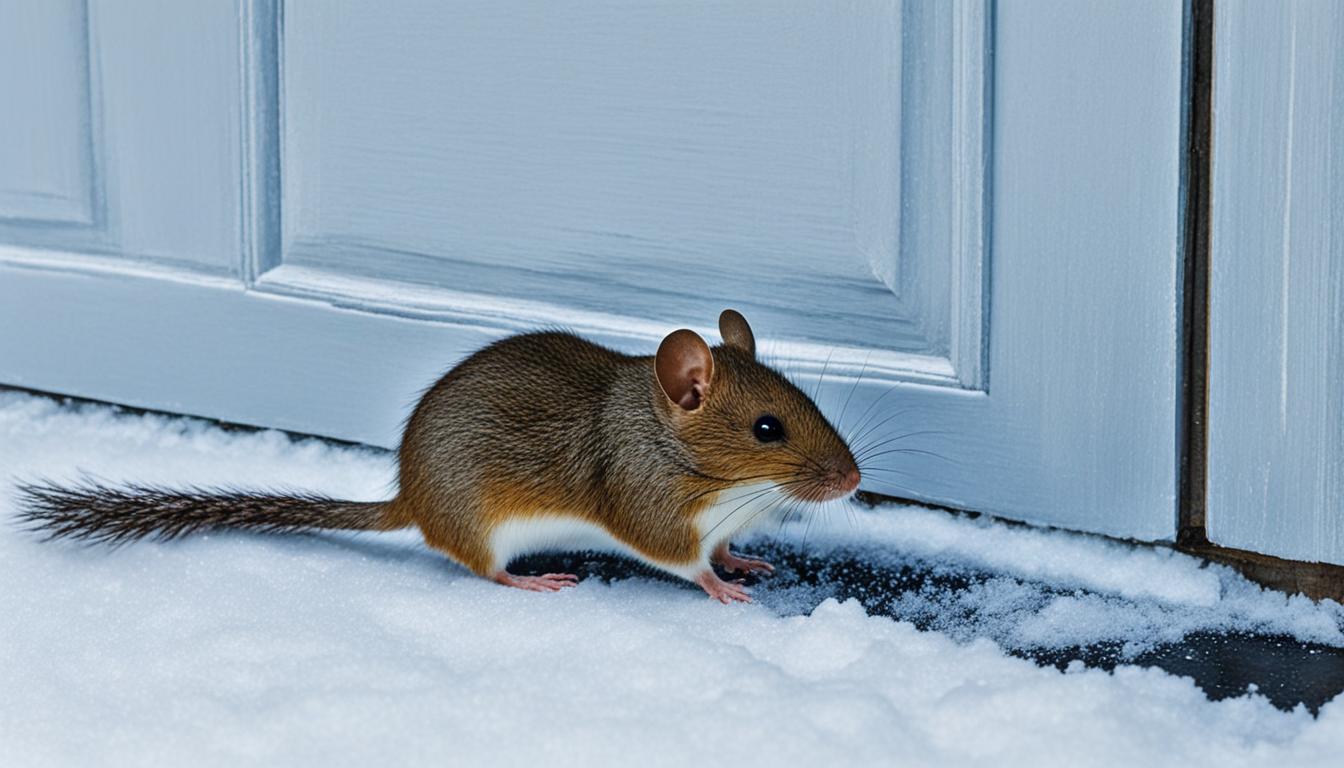


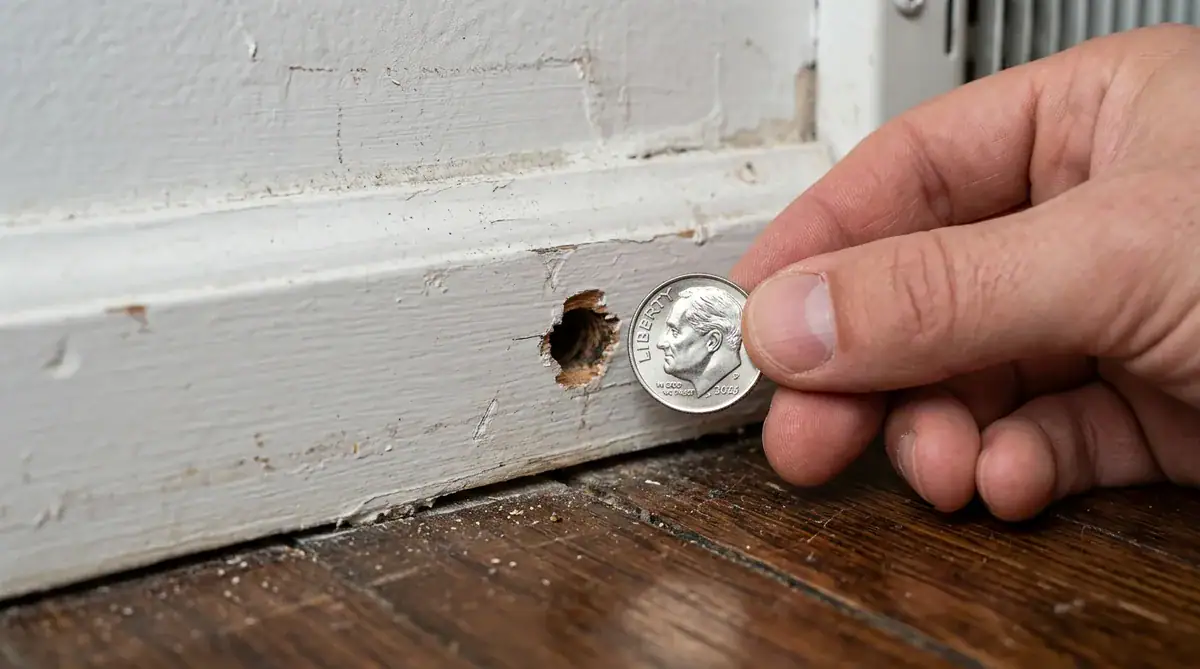
How small a hole can a mouse fit through?
A mouse does not need a dramatic hole to enter a home. Very small gaps around doors, utility pipes, siding transitions, garage thresholds, vents, and foundation cracks can become entry points. If you can see daylight under a door corner, fit a pencil-sized object into a gap, or find droppings near a wall-floor seam, treat the opening as suspicious.
The exact size matters less than the repair sequence. First confirm whether the hole is an active route. Second remove food access and trap active mice. Third seal gaps with durable materials. Fourth monitor for new droppings. Sealing blindly can trap mice inside wall voids if active routes are closed before control.
Entry holes by location
Garage door corners
Pipe penetrations
Foundation cracks
Vents
Siding and roofline gaps
Why foam alone fails
Treat gaps around 1/4 inch as a mouse-entry risk and a conservative exclusion threshold, not a universal minimum for every round hole or slot. UC IPM recommends closing small structural openings with chew-resistant materials and warns that expanding foam alone is ineffective in holes used by house mice. Match the repair to the opening: metal mesh or suitable filler for utility gaps, masonry repair for cracks, and a properly fitted cover for vents. Do not pack weep holes or vents shut; preserve required drainage, ventilation, and combustion air, using a suitable guard or qualified repair where needed.
Expanding spray foam can look finished, but appearance is not the same as rodent resistance. If the material can be chewed, pushed, or pulled apart, it is not a durable mouse barrier. Foam may be useful as part of a repair system in some non-critical situations, but it should not be the only defense in an active mouse hole. Use chew-resistant materials and correct surface repair.
Steel wool for mice: when it works and when it fails
Steel wool is popular because it is cheap and easy to pack into small holes. It can slow mice in a small gap, especially when paired with caulk. The weakness is durability. Ordinary steel wool can rust, loosen, or fall out. For wet, exterior, or long-term repairs, stainless fill fabric, copper mesh, hardware cloth, mortar, concrete, metal flashing, or a proper door repair is often better.
Do not leave steel wool exposed where children, pets, or bare hands can contact it. Wear gloves and make sure the final repair is stable.
Can mice climb walls and reach upper gaps?
Yes, mice are capable climbers. Rough walls, pipes, cables, brick, siding, vegetation, and stored items can help them reach higher openings. A mouse problem in a wall or attic can begin at ground level, garage level, roofline, vent, or utility entry. Trim vegetation against the house, reduce stacked materials near walls, and inspect both low and high transitions.
How to inspect your home for mouse holes
- Walk the exterior slowly with a flashlight.
- Look for daylight under doors, garage corners, and threshold gaps.
- Check utility pipes, cable lines, dryer vents, AC lines, and hose bibs.
- Inspect the foundation, siding transitions, and crawlspace vents.
- Go inside and check under sinks, behind appliances, garage walls, and basement edges.
- Mark likely holes with painter tape or photos before sealing.
Best materials for mouse holes
Small utility gaps usually need copper mesh or stainless fill fabric plus a sealant compatible with the surface. Larger holes need hardware cloth, sheet metal, mortar, concrete, or wood/trim repair backed by chew-resistant material. Doors need door sweeps, threshold adjustment, or weatherstripping. Vents need a cover that keeps airflow working.
Use the mouse-proofing materials guide for a gap-by-gap buying sequence and the mouse proofing hub for whole-home exclusion.
Mouse-proofing supplies
Affiliate disclosure: as an Amazon Associate, Mice Gone Guide may earn from qualifying purchases. Product availability, packaging, sellers, and labels can change. Check the current listing and product label before buying or using anything around children, pets, food, or contaminated areas.

Xcluder Rodent Control Fill Fabric DIY Kit
Best for: Packing small utility gaps, pipe penetrations, and siding transitions before sealing with the right surface-compatible material.
Avoid if: Do not use it as a structural repair for large holes, damaged masonry, open vents, or unsafe ladder work.

Heavy-Duty Nitrile Disposable Gloves
Best for: Reducing direct hand contact while wiping droppings, bagging disposable towels, and handling contaminated liners.
Avoid if: Do not reuse disposable gloves after cleanup or touch clean surfaces with contaminated gloves.
Real-home examples for mouse entry holes
The fastest way to solve a mouse problem is to stop treating the entire house as one vague infestation. Start with the room or surface where the evidence appears, then decide whether the priority is identification, cleanup, trapping, sealing, or prevention. The same evidence can mean different things in a kitchen, garage, wall void, apartment, or storage area.
Hole under kitchen sink
Garage door gap
Foundation crack
Vent opening
Use this table before buying anything. A trap helps only when there is active mouse travel. A disinfectant helps only after contaminated material is wetted and wiped safely. Sealing material helps only when the gap is correctly identified and the repair does not block required ventilation, drainage, combustion air, or access for utilities.
Final checklist before you act
- Keep children, pets, and unnecessary people away from contaminated or trapped areas.
- Photograph droppings, gnaw marks, nests, rub marks, food damage, or possible entry holes before cleaning or sealing.
- Remove food access first: pet food, bird seed, pantry spills, trash, snacks, and cardboard clutter.
- Place traps only on confirmed active routes and only where they can be used safely.
- Wet droppings and nesting material with disinfectant before wiping or disposal.
- Seal gaps with durable, chew-resistant materials after active routes are controlled.
- Monitor the same spots for new droppings and trap activity; a fixed number of quiet days does not prove clearance.
The core principle for mouse entry holes is simple: identify the strongest evidence, choose the safest next step, close the cause of the problem, and monitor for new activity. That sequence is more useful than a miracle claim and safer than relying on a single product.
Frequently asked questions
Can mice chew through expanding spray foam?
Yes, mice can easily chew through standard expanding polyurethane foam. Foam alone is not a rodent-proof barrier. For an ordinary structural gap, choose a chew-resistant repair such as suitable metal mesh, stainless fill, or masonry and a surface-compatible sealant. Do not pack drainage openings, vents, or combustion-air openings shut; use a correctly fitted guard or qualified repair that preserves their function.
How small a hole can a mouse fit through?
Treat gaps around 1/4 inch as a mouse-entry risk. UC IPM advises sealing small structural openings; the size and shape of an opening matter, so this is an exclusion guideline rather than an exact minimum for every round hole or slot.
Can mice fit through a dime-sized hole?
A dime-sized opening is large enough to treat as a possible mouse entry point. Seal it with chew-resistant materials instead of foam alone.
Can mice chew through spray foam?
Foam alone is not a durable mouse-proofing material. Mice can gnaw or push through weak materials, so pair repairs with metal, concrete, mortar, hardware cloth, copper mesh, or stainless fill where appropriate.
Should I use steel wool for mouse holes?
Steel wool can work as a temporary or small-gap filler, but it can rust. Stainless fill fabric or copper mesh with proper sealant is often more durable.
When should I not seal a hole myself?
Do not block vents, drains, combustion-air openings, electrical hazards, gas lines, HVAC openings, or structural damage. Use a qualified professional for unsafe or complex gaps.
More practical questions readers ask
What should I do tonight if I cannot finish the whole job?
Do the safest reversible actions first. Move exposed food into rigid containers, keep children and pets away from contaminated areas, photograph evidence, place traps only where they can be used safely, and avoid dry cleanup. Do not start demolition, roof work, wall cutting, heavy contamination cleanup, or rodenticide use when you are tired or unsure.
What should I track after taking action?
Track the date, room, evidence type, cleanup completed, traps placed, catches, sealed gaps, and new signs. Simple notes prevent repeated guessing. New droppings in a previously cleaned area warrant inspection for ongoing activity; they do not identify a particular access route or prove that a repair failed. If traps are untouched but food damage continues, placement may be wrong or competing food remains.
What should happen after this step?
Every mouse problem has connected parts: signs, active removal, safe cleanup, exclusion, prevention, and monitoring. After the immediate problem is handled, check the related step that closes the loop. Droppings need cleanup and active control. Traps need food control and placement. Sealing needs monitoring. Prevention needs monthly checks.
What should I avoid believing?
Avoid guaranteed timelines, miracle repellents, fake testing claims, and one-product solutions. Mice are controlled by reducing access to food and shelter, trapping or otherwise controlling active animals, cleaning contamination safely, sealing entries, and verifying that new signs stop.
When should I stop DIY and call a professional?
Call a qualified professional for repeated activity after correct DIY steps, heavy droppings, contaminated insulation, HVAC contamination, inaccessible wall or attic activity, dead-rodent odor, wiring damage, or health-risk occupants. Professional help is also appropriate when you cannot place traps, clean waste, or seal gaps safely.
Sources and safety references
- CDC: How to Clean Up After Rodents
- CDC: Hantavirus Prevention
- UC IPM: House Mouse Pest Notes
- EPA: Controlling Rodents and Regulating Rodenticides
This page is educational information for ordinary homes. It is not medical, legal, pesticide-label, or professional remediation advice. Follow product labels, local rules, and professional guidance for high-risk conditions.



Alexios Papaioannou is the founder and lead editor of Mice Gone Guide. He oversees research, article review, and content updates focused on mouse prevention, humane control, home proofing, and safety-first household guidance.