
How to Seal Your Home From Mice
Mouse entry-point sealing guide

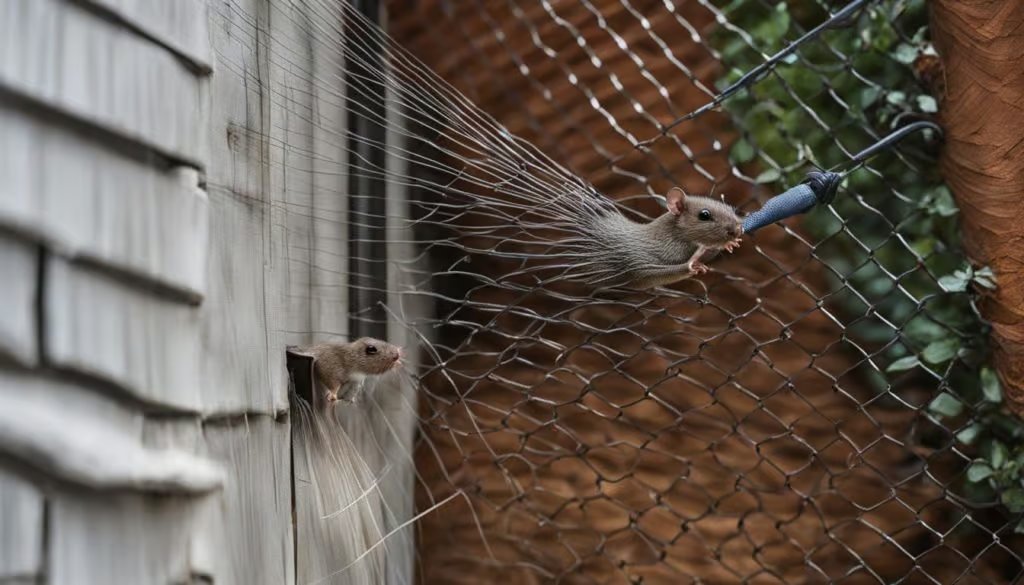
Before you seal: confirm activity
If there are fresh droppings inside, combine trapping with staged sealing so you do not trap live mice inside walls, ceiling voids, or attic spaces. Use fresh mouse signs to decide where to work first.
Mouse entry-point checklist
| Area | Look for | Best material | Watch out |
|---|---|---|---|
| Pipe and cable penetrations | Round gaps, rub marks, droppings | Copper mesh or stainless filler plus sealant | Do not damage utility lines. |
| Garage doors | Daylight at corners, chewed weatherstripping | Door sweep, threshold repair, metal-backed seal | Recheck after door movement. |
| Foundation and siding | Cracks, missing mortar, gaps at transitions | Mortar, concrete patch, flashing, hardware cloth | Do not seal drainage routes incorrectly. |
| Vents and weep areas | Unscreened openings | Appropriate metal mesh | Keep required airflow and drainage. |
| Roofline and soffits | Open returns, loose trim, tree access | Exterior repair materials | Use safe ladder practices or a pro. |
Best materials after you identify the gap

Xcluder Rodent Control Fill Fabric DIY Kit
Best for: pipe penetrations, utility openings, siding transitions, and small gnaw-prone gaps.
Avoid if: large holes that need hardware cloth, metal flashing, mortar, or structural repair.
Use note: Wear gloves and pair with the correct sealant or repair material for the surface.

STUF-FIT Copper Mesh – 100 ft. roll
Best for: small irregular openings around pipes, weep-adjacent cracks, and awkward utility edges.
Avoid if: open vents, drainage routes, or places where the wrong repair could block airflow or water movement.
Use note: Use as a backing material, then seal or cover appropriately.
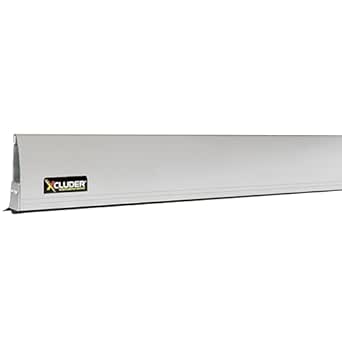
Xcluder 36 inch Versa-Line Rodent-Proof Door Sweep
Best for: exterior doors, garage side doors, sheds, and utility rooms with low door-bottom gaps.
Avoid if: the threshold is warped, unmeasured, or needs structural repair before a sweep can seal correctly.
Use note: Measure the door and clearance first, then recheck after installation for light and air gaps.
Step-by-step sealing workflow
1. Photograph and mark every gap
Use painter tape or an inspection log. Group gaps by material: pipe gaps, door gaps, siding gaps, foundation cracks, vents, and roofline problems.
2. Remove attraction sources
Before final repairs, remove accessible food, pet food, seed, trash, cardboard, and nesting material that keeps mice exploring the area.
3. Control active mice
Trap along active travel routes so the indoor population drops before final sealing. Heavy or uncertain activity may need professional inspection.
4. Install durable backing
Use metal mesh, stainless fill, hardware cloth, flashing, mortar, or concrete patch. Sealant is a finish, not the only barrier for chew-prone gaps.
5. Recheck after weather and door movement
Materials shrink, doors shift, and contractors reopen gaps. Reinspect after storms, cold snaps, HVAC work, plumbing work, and garage-door adjustments.
FAQ
Can mice get through a quarter-inch gap?
Treat gaps around a quarter inch or larger as high priority, especially near food, warmth, utility lines, doors, and garages.
Is spray foam enough to keep mice out?
Foam alone is not reliable where mice can gnaw. Use metal or chew-resistant backing first, then seal according to the product label.
Should I seal before or after trapping?
If fresh signs are inside, trap and remove food first or in parallel, then complete final sealing when activity is controlled.
What material can mice not chew through easily?
Metal-based barriers such as stainless fill, copper mesh, hardware cloth, flashing, and metal door protection are more durable than soft foam, rubber, or plastic alone.
Definition: what this page means by entry-point sealing and mouse exclusion
In this guide, entry-point sealing and mouse exclusion means a practical, safety-first process that uses evidence from the home instead of guesses. The central principle is simple: inspect likely entry points, prioritize active routes, pack gnaw-prone gaps with metal-backed material, seal with the right surface repair, fix door gaps, and monitor for new signs. That is why the article avoids one-product miracle claims and keeps scent tricks, poison, and random trap placement in perspective.
A mouse problem is rarely solved by one isolated action. Food access can keep activity going even when traps are present. Open gaps can restart the problem after cleanup. Dry cleanup can spread dust. Unchecked traps can create odor or suffering. Poorly placed products can expose children, pets, or non-target animals. Each of these connects to the others, which is why a single fix on its own so often fails.
Important terms and concepts
- mouse exclusion
- entry points
- quarter-inch gaps
- pipe penetrations
- door sweeps
- garage thresholds
- copper mesh
- stainless-steel fill fabric
- hardware cloth
- mortar
- sealant
- vents
- weep holes
These terms matter because they describe the real parts of the problem. Signs, sanitation, trapping, cleanup, exclusion, prevention, and escalation all fit together as one sequence.
Room-by-room and situation-by-situation checklist
Mouse control gets easier once you stop thinking about the whole house at once and start mapping the zones where activity is actually concentrated. Use the table below to work through the locations that matter most, one at a time.
| Area or situation | What to check | How to use the finding |
|---|---|---|
| Garage door corners | The triangular gap at each bottom corner where the door seal stops short of the jamb. | This is the single most common garage entry. Fit corner seals or a threshold — a new bottom seal alone leaves both corners open. |
| Exterior door bottoms | Daylight visible under a closed door, and worn or curled sweeps. | A gap wider than about a quarter of an inch is enough for a house mouse. Fit a sweep with a metal or reinforced edge, since rubber alone is chewed through. |
| Pipe penetrations | Gaps around supply, drain, gas, and air-conditioning line sets where they pass through the exterior wall. | Pack the void with copper mesh or stainless fill fabric first, then seal over it. Expanding foam on its own is chewed straight through. |
| Siding transitions | Open J-channel ends, corner trim gaps, and the joint where siding meets the foundation. | Open channels behind siding act as a travel route. Block them where they open to the outside rather than trying to seal mid-wall. |
| Foundation cracks | Cracks and missing mortar wider than a pencil, especially at corners and below grade. | Back the void with mesh, then patch with mortar or hydraulic cement so the repair is both structural and chew-resistant. |
| Crawl-space edges | Torn vent screens, gaps around the access hatch, and damaged skirting. | Replace screens with quarter-inch hardware cloth. Never block a vent that the crawl space needs for airflow — screen it instead. |
| Utility lines | Electrical, cable, and telecom entries, plus the penetration behind the meter. | Seal around the conduit where it enters the wall. Do not disturb a utility meter seal — that part is the utility company’s work, not yours. |
| Kitchen wall penetrations | Dishwasher, ice-maker, and waste-line holes cut through the back of a cabinet. | Seal these from inside the cabinet with mesh and sealant. They connect directly to the wall void, which is why kitchen activity restarts after trapping. |
Do not clean away every sign before you understand where the activity is concentrated. Fresh droppings, gnaw marks, and rub marks are unpleasant, but they are also evidence. Once documented, cleanup should follow a wet, contained process, especially around food-contact surfaces, children, pets, or stored items.
Step-by-step decision framework
Step 1: Identify the real problem type
Work out whether you are dealing with active mice, leftover contamination, open entry points, repeated re-entry, or simply a product-choice decision. A page about seal home from mice should not treat all of those as the same problem. Active mouse signs call for trapping and food control. Contamination calls for wet cleanup. Re-entry calls for exclusion. Buyer intent calls for a product comparison after the safety sequence is clear.
Step 2: Protect people, pets, and food first
Before using any product, move food into rigid containers, keep children and pets out of contaminated areas, and never disturb droppings or nesting material while they are dry. If bait, disinfectant, sealant, or trap products are used, the label matters more than any blog post. This is especially important in kitchens, apartments, garages, and homes with pets.
Step 3: Treat the active route, not the whole house randomly
Mouse activity often follows edges: baseboards, cabinet backs, utility lines, garage walls, appliance gaps, and warm hidden runs. Random trap placement or random repellent use wastes time. The best action is the one placed on the route mice are already using.
Step 4: Close the loop with cleanup and exclusion
Cleanup without removal leaves new droppings. Trapping without exclusion can become a cycle. Exclusion without monitoring can trap activity inside. The complete loop is evidence, food control, trapping, wet cleanup, sealing, and monitoring.
Step 5: Escalate when the risk is bigger than DIY
Professional help is appropriate when activity repeats after correct DIY steps, when droppings are widespread, when wall or attic voids are involved, when insulation or HVAC areas are contaminated, or when health-risk occupants are present. Knowing where DIY stops is part of doing it safely.
Best for / avoid if guidance
| Option | Best for | Avoid if | Important note |
|---|---|---|---|
| DIY inspection | Small, visible, recent activity with clear evidence. | You cannot safely access the area, or contamination is heavy. | Photograph evidence before cleanup or sealing. |
| Traps | Active runways where placement can be controlled and checked daily. | Children, pets, or non-target animals can reach the device. | Use several properly placed traps rather than one trap in the open. |
| Live trapping | Light activity where traps can be checked very frequently. | You cannot inspect often or local release rules are unclear. | Live trapping still requires exclusion and sanitation. |
| Exclusion materials | Confirmed gaps, pipe penetrations, door bottoms, and utility routes. | The gap is an active vent, drain, combustion-air opening, or structural issue. | Do not block required ventilation or drainage. |
| Professional pest control | Repeated activity, heavy contamination, walls, attics, odors, or health concerns. | The issue is a single visible fresh sign that can be safely managed. | Ask what inspection, exclusion, cleanup, and monitoring are included. |
Where to go next
Use this checklist while inspecting on your phone
- Take photos of droppings, gnaw marks, rub marks, nesting material, and possible entry holes before cleaning.
- Keep children and pets away from contaminated or trapped areas.
- Work from the strongest evidence first instead of treating every room at random.
- Do not dry-sweep or dry-vacuum mouse droppings or nesting material.
- Use products only after matching them to the problem: active mice, cleanup, sealing, or prevention.
- Check traps and live-catch devices frequently and follow all product labels.
- Stop and call a qualified professional for heavy contamination, unsafe access, repeated activity, or health-risk situations.
More questions people ask
What should I do before buying anything for seal home from mice?
Identify the problem type first. Look for fresh signs, active routes, contamination, likely entry gaps, and safety constraints. A product is only useful when it matches the situation. Buying traps, repellents, or sealants before this step often leads to wasted money and missed activity.
What is the most common reason DIY mouse control fails?
The most common failure is treating one symptom while leaving the rest of the system untouched. A trap can catch one mouse while food remains available. Cleanup can remove visible droppings while entry gaps remain open. Exclusion can fail if active mice are still inside. The fix is a sequence, not a single object.
Final safety checklist before you act
- Identify whether you are dealing with active mice, leftover contamination, open entry points, or a product-choice decision.
- Keep food, pet food, bird seed, and stored snacks in rigid sealed containers.
- Place traps only where activity is confirmed and where children and pets cannot reach them.
- Wet droppings and nesting material with disinfectant before removal.
- Use chew-resistant materials for entry points; foam alone is not a durable rodent barrier.
- Read every product label before use, especially around kitchens, pets, children, and contaminated spaces.
- Monitor for at least two quiet weeks after the last sign of activity.
Sources and review notes
This guide is written for ordinary homes and reviewed against public-health, pesticide-safety, and integrated pest management references. It is not medical, legal, or pesticide-label advice.
- CDC: How to clean up after rodents
- EPA: Safely use rodent bait products
- UC IPM: House mouse control and exclusion
Author/editorial note: Written by Alexios Papaioannou for Mice Gone Guide. Last reviewed May 31, 2026. Update when public-health cleanup guidance, pesticide labels, or exclusion best practices change.

Alexios Papaioannou is the founder and lead editor of Mice Gone Guide. He oversees research, article review, and content updates focused on mouse prevention, humane control, home proofing, and safety-first household guidance.