
Natural Mouse Repellents: Evidence, Limits, and Safer Next Steps
Quick answer: Natural mouse repellents are not a stand-alone removal or prevention plan. Some odors may have a short-lived effect in a limited setting, but volatile oils fade, do not close an entry point, and do not resolve food access or hidden nesting. Use scent products only, if at all, as a minor supplement after inspection, sanitation, protected trapping, safe cleanup, and exclusion.
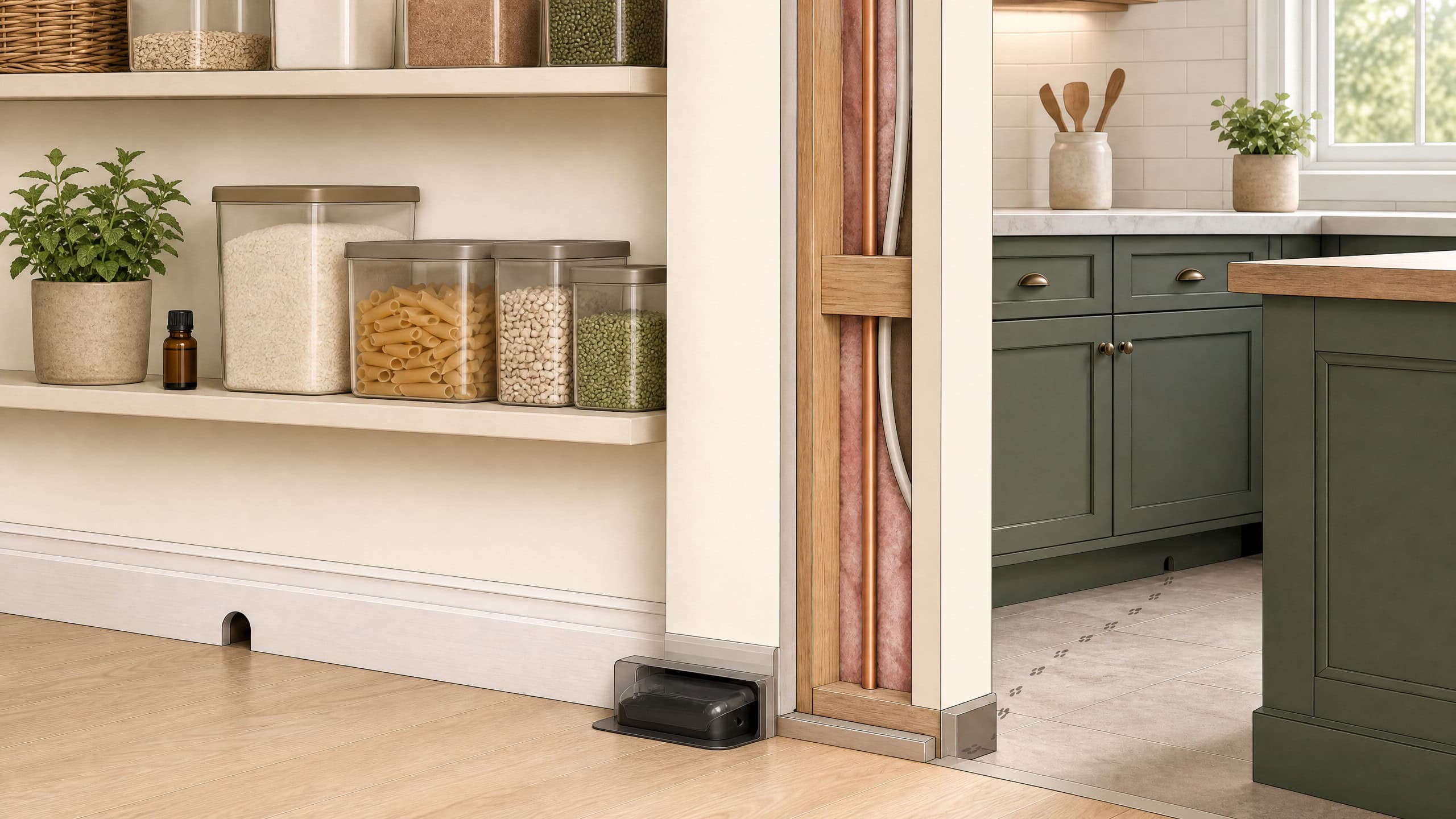
Why “natural” is not the same as reliable
Mice respond to shelter, food, water, protected travel routes, and access into a building. A strong scent does not remove those drivers. NC State Extension notes that some odors may repel mice under limited conditions, but volatile oils disappear quickly and repellents are not a reliable form of mouse management or prevention. UC IPM similarly finds little evidence that sound, magnetic, or vibrational devices drive established mice from buildings.
What the evidence supports
| Option | Evidence-led role | What it cannot replace |
|---|---|---|
| Peppermint or other essential-oil scent | At most, a short-lived supplemental odor in a clean, low-risk location | Inspection, food control, protected trap placement, cleanup, or exclusion |
| Ultrasonic device | No reliable primary-control role; sound is directional and loses intensity around objects | Evidence-based mechanical control and durable building repair |
| Dryer sheets, coffee grounds, cat hair, and similar household tactics | Anecdotal methods without a reliable role in an integrated plan | Active route identification and follow-up monitoring |
| Mothballs or improvised chemical mixtures | Not an appropriate household mouse-control shortcut | Label-directed pest management and safer physical control |
The integrated approach that comes first
- Confirm the signs. Use the mouse signs hub to distinguish a likely route from a one-off sound or old evidence.
- Make food and shelter harder to access. Store dry goods and pet food in rigid containers, clean spills, manage clutter, and look for moisture issues.
- Use protected traps on accessible active routes. Follow the room-by-room trap guide instead of setting a device randomly.
- Clean contamination safely. Do not dry sweep or vacuum droppings; use the CDC-aligned cleanup sequence.
- Repair entry routes. Match the material to the opening through the mouse-proofing hub.
Using scent products without creating a new problem
If you decide to use a scent product, treat it as optional and avoid using it where it could contaminate food, irritate people or animals, or interfere with a trap/bait strategy. “Natural” products can still be concentrated, flammable, irritating, or unsafe if used contrary to a label. Keep essential oils and any pesticide product away from children, pets, food, food-preparation surfaces, and sensitive individuals unless the relevant label explicitly permits the use.
When a repellent page should lead to professional help
Move beyond a household scent approach when you have heavy or repeated contamination, ongoing activity after correct proofing and trapping, damaged wiring, inaccessible nesting, an animal other than a mouse, or a setting where children, pets, residents, or building systems complicate safe control. The complete removal guide provides a practical decision sequence.
How to evaluate a mouse-repellent claim
Before trying a product, ask five practical questions. Does the claim say what the product can realistically do? Does it address an active route, food access, or an opening into the building? Can it be used safely around people, pets, food, and materials? Can you measure whether it changed anything besides the room’s smell? And does it postpone the work that actually makes a home less accessible to mice?
Those questions prevent a familiar cycle: a scent is applied, the odor fades, signs return, and the household has still not identified the entry route or stored food securely. A measured plan gives more useful feedback. Clean safely, record where signs were found, protect a reachable route with a suitable trap or monitor, and recheck the same location.
Essential oils: practical limits and safety
Concentrated essential oils are not harmless because they are plant-derived. They may irritate skin or airways, damage some finishes, create fragrance concerns, and be risky if misused around children or animals. They should never be sprayed on food-contact surfaces or used in a way that conflicts with a product label. If a household has pets, sensitivities, respiratory issues, or a complex infestation, the lowest-risk first moves are food storage, sanitation, protected monitoring, and physical exclusion.
Why ultrasonic devices disappoint in real rooms
Room geometry matters. Sound can be blocked by cabinets, appliances, furniture, and walls; its effect also changes with distance. UC IPM says ultrasonic sounds have very limited use because they are directional, do not penetrate behind objects, and lose intensity quickly. A device that makes an area feel “treated” is not the same as a device that removes an established route. Use fresh evidence—rather than the presence of a plug-in—to decide whether a plan is working.
When a limited supplement may make sense
If the core steps are already complete, a user may choose a scent product as a personal preference in a clean, low-risk storage area. It should be treated as optional, temporary, and easy to stop—not as a promise of control. Do not place it where it could discourage necessary monitoring, contaminate food, or create an exposure concern. The priority remains an environment that offers fewer food sources, fewer hidden routes, and fewer entry points.
A better test of success
Success is not whether a product has a strong scent. It is whether new signs stop appearing after safe cleanup, whether protected monitors show less activity, whether food remains undamaged, and whether accessible gaps have been repaired correctly. If these conditions do not improve, return to the full removal plan rather than layering more scents over the same route.
A household decision guide: supplement or solve the cause?
| If you find… | Do this first | Do not substitute with |
|---|---|---|
| Fresh droppings near a pantry or appliance | Clean safely, protect the active wall-edge route, and secure food | A scent placed on the other side of the room |
| A gap around plumbing, a door, or siding | Identify the opening’s purpose and use a durable, appropriate repair | Foam alone or a fragrance near the gap |
| Recurring nighttime noise with no safe access | Inspect reachable evidence and obtain qualified help if the source remains inaccessible | Opening a wall or applying concentrated products into a void |
| A home with children, pets, or sensitive occupants | Favor sanitation, physical exclusion, and protected monitoring | Improvised chemicals or unlabeled mixtures |
This framework keeps a “natural” option in proportion. If it does not reduce new evidence or make a room safer to monitor, it is not solving the reason mice are using the space.
Why a scent can appear to work when the problem has not been solved
Mouse activity can vary from day to day. A household might apply a scent at the same time it cleans a cabinet, removes food, moves boxes, or changes the weather exposure around the home. When signs seem to disappear, it is tempting to credit the scent alone. Without a before-and-after inspection record, it is hard to know whether the route changed, the evidence was old, or the food source moved. This is why integrated management uses visible measures: new droppings, food damage, monitor activity, and documented entry points.
Do not make a “natural” workaround into an exposure issue
Never mix cleaners, ammonia, oils, or other products to create a homemade repellent. Do not use mothballs outside their labeled purpose, and do not use any pesticide contrary to its label. Strong-smelling products can be particularly unsuitable in kitchens, bedrooms, pet areas, poorly ventilated spaces, and homes with young children or people with respiratory sensitivities. If you are unsure whether an approach is appropriate, choose the physical, low-exposure core steps and seek qualified advice.
Seasonal prevention without scent dependence
Before colder weather or after exterior work, inspect door sweeps, window screens, garage corners, utility penetrations, and food-storage routines. Trim or manage conditions that provide easy cover right next to the building where appropriate, and keep bird seed, pet food, and bulk goods in suitable containers. A short seasonal inspection gives a home a better prevention baseline than repeatedly replacing a scent product.
Use evidence, not marketing language, to decide what to keep
If a product promises to “drive mice away,” ask whether it can overcome a route with food, shelter, and a reachable entrance. If the answer is no, it should not be the core plan. Keep only measures that make it easier to observe, remove, or prevent activity. That standard protects time, money, and the safety of the household.
Frequently asked questions
Can peppermint oil get rid of mice?
No. Scent products may be used as an optional supplement in a low-risk, cleaned area, but they do not remove active mice, close openings, or replace monitoring and trapping.
Do ultrasonic mouse repellents work?
University IPM guidance finds little evidence that ultrasonic devices provide reliable control. Sound is directional, loses intensity with distance, and mice can become accustomed to repeated sounds.
What is the best non-toxic first step for mice?
Confirm activity, remove accessible food and shelter, use protected traps on verified routes, clean contamination safely, repair accessible gaps, and monitor for new signs.
Editorial review and sources
Reviewed August 14, 2026. Mice Gone Guide uses public-health and university integrated-pest-management guidance to explain household options. This page is general education; follow product labels and obtain qualified help for unsafe, inaccessible, or extensive situations.
- UC IPM: House Mouse
- Cornell CALS: Managing Mice and Rats
- NC State Extension: Structure-Invading Mice
- CDC: How to Clean Up After Rodents
About the author: Alexios Papaioannou is the founder and lead editor of Mice Gone Guide. Content is reviewed for practical household relevance against CDC cleanup guidance, EPA safety principles, and university IPM resources.

Alexios Papaioannou is the founder and lead editor of Mice Gone Guide. He oversees research, article review, and content updates focused on mouse prevention, humane control, home proofing, and safety-first household guidance.