
Quick answer: Mouse control starts with evidence and exclusion. Identify signs, seal likely entry points, choose traps or a label-approved bait strategy for the household, and clean droppings with public-health precautions. A product alone rarely fixes an open route into the building.
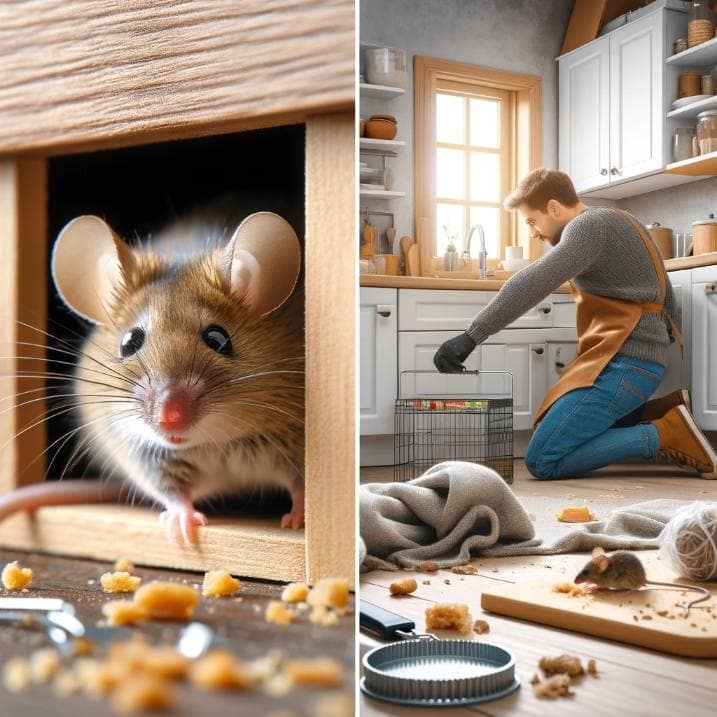
Searches for “mouse bait stations,” “mouse killer,” “mouse footprints,” “catch and release mouse traps,” and “live catch mouse trap” describe different moments in a control problem. The safest useful answer is not a longer shopping list. It is a decision path that helps a reader understand what the evidence shows, what a product can do, and where professional help is warranted.
Read the evidence before buying a product
Footprints, droppings, gnaw marks, nesting material, and odor answer different questions. Photograph the sign first, note the room and date, inspect food storage, and look for a repeated route. A footprint can suggest activity, but it cannot tell you the species, population, or whether the route is still active by itself.
| Sign | What it may indicate | What to do next |
|---|---|---|
| Droppings | Recent or historical activity near food, shelter, or travel routes. | Do not sweep or vacuum dry material; plan safe cleanup and inspect nearby gaps. |
| Gnaw marks | Access to food, packaging, wiring, or nesting material. | Remove food access, protect cables where appropriate, and find the entry route. |
| Footprints or rub marks | A travel path along edges, behind appliances, or through dusty areas. | Use the pattern to position monitoring or traps; recheck after exclusion. |
| Nesting material | A protected place close to resources. | Keep children and pets away and assess whether professional cleanup is needed. |
Choose the control method for the household
| Option | When people consider it | Safety boundary |
|---|---|---|
| Snap or enclosed traps | When the goal is direct capture in a known travel route. | Place securely where children and pets cannot reach them; use a trap sized for mice and follow the product directions. |
| Mouse bait stations | When a label-approved bait strategy is being considered. | Use only as labeled, keep it inaccessible to children and pets, and follow local requirements for placement and disposal. |
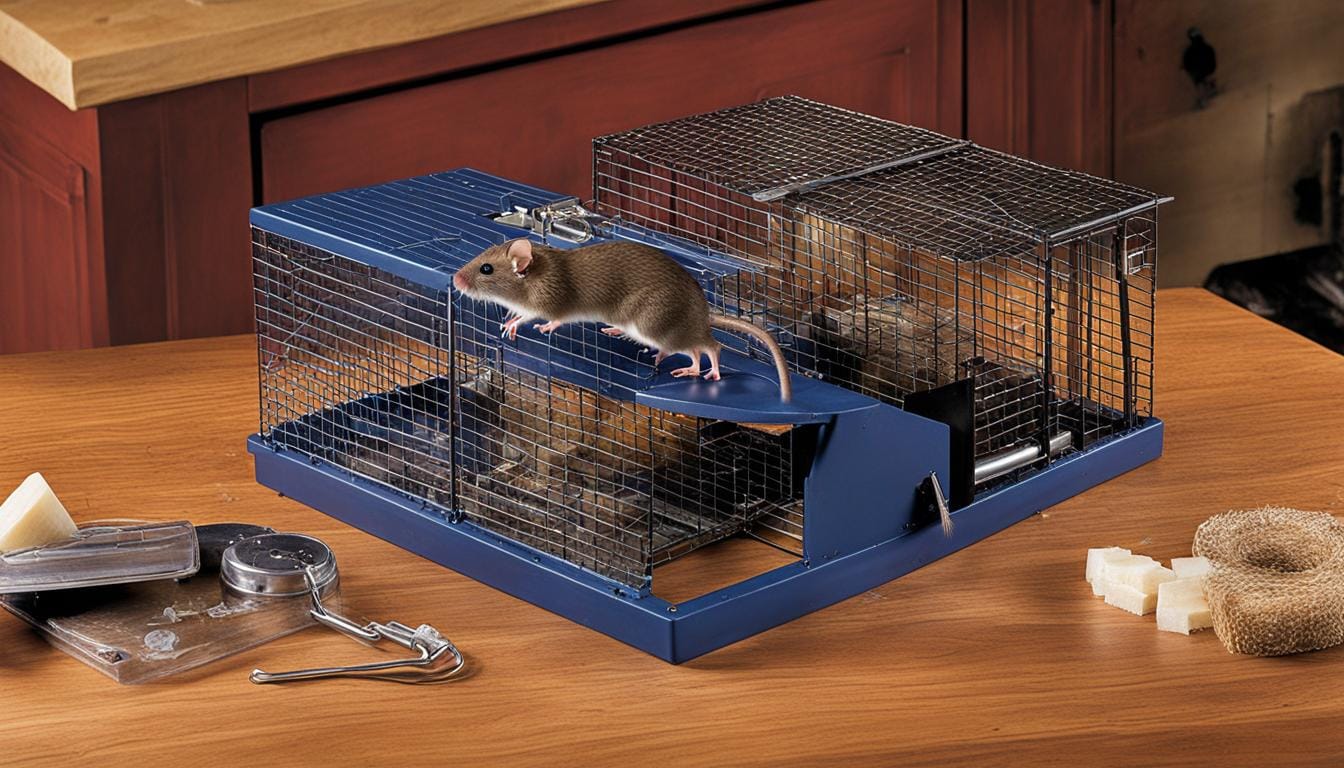
| Catch-and-release mouse traps | When a household wants a non-kill capture approach. | Check frequently and have a lawful, humane release plan. Leaving an animal in a trap creates a welfare problem. |
| Professional control | When activity is persistent, inaccessible, extensive, or involves a vulnerable household. | Ask what exclusion, monitoring, cleanup, and follow-up are included—not only what chemical is used. |
The EPA’s rodent-control guidance emphasizes choosing an appropriately sized product, following the label, and keeping traps and baits away from children and pets. Treat that as a minimum boundary, not as permission to improvise.
Exclusion is the part that keeps the problem from repeating
After locating likely routes, close gaps with materials suited to the location and protect food and waste. Pay attention to door sweeps, pipe penetrations, utility openings, foundation gaps, garage edges, and spaces behind appliances. Avoid sealing an active animal into an inaccessible void without a plan for removal.
- Store food, pet food, and bird seed in sealed containers.
- Clean crumbs and spills promptly, including under appliances.
- Reduce clutter that provides protected nesting space.
- Inspect the exterior and interior transition points.
- Record repairs and check whether new signs appear after the repair.
Clean droppings without putting them into the air
The CDC rodent-cleanup guidance is the controlling source for this section. Do not dry-sweep or vacuum droppings, urine, or nesting material before wetting and disinfecting it as directed. Ventilate the space as recommended, wear the appropriate protective equipment, disinfect the material, allow the required contact time, and dispose of waste safely.
If an area is heavily contaminated, difficult to ventilate, or connected with a workplace, rental, crawlspace, or medically vulnerable household, pause and ask a qualified professional what cleanup protocol applies. A blog checklist is not a substitute for public-health or occupational guidance.
What “mouse killer” should and should not mean
“Mouse killer” is a shopping phrase, not a complete control plan. A product may remove one animal while leaving the entry point open. Do not mix products, transfer bait to unapproved containers, or place it where a pet or child can access it. Read the active ingredient, label directions, disposal rules, and emergency instructions before buying.
If exposure is suspected, keep the product label available and contact a veterinarian, poison-control service, or local emergency service as appropriate. Do not wait for symptoms before seeking professional advice.
A simple decision path
- Is there a current sign? If not, monitor and inspect rather than applying a product automatically.
- Is the entry route known? If yes, plan exclusion. If no, locate the route before relying on repeated trapping.
- Are children, pets, wildlife, or food-preparation areas involved? Choose the lowest-risk option that still follows the label, or ask a professional.
- Is the activity persistent or inaccessible? Escalate instead of increasing product quantity or improvising placement.
- After capture or treatment, are signs gone? Continue monitoring; control is not complete until the route and attractants are addressed.
FAQ
Can mouse footprints identify the species?
Usually not with confidence from a casual photograph. Treat footprints as one clue and consider the complete pattern of signs, location, size, and activity. If identification matters for a health or wildlife decision, ask a qualified professional.
Are bait stations safe around pets?
Only when the exact product is used according to its label and placed where pets and children cannot reach it. “Station” does not mean risk-free. If exposure is suspected, seek veterinary or poison-control guidance immediately.
Are live-catch traps always humane?
No. They require frequent checking, suitable conditions, and a lawful release plan. A captured animal can become stressed, dehydrated, injured, or exposed to temperature extremes if the trap is neglected.
Why do mice return after trapping?
Trapping may remove an animal without correcting food access or the entry route. Recheck exclusion, sanitation, and monitoring after the immediate activity stops.
When should I hire a pest professional?
Consider professional help when signs persist, the route is inaccessible, contamination is extensive, wiring or structural damage is involved, or the household cannot safely follow the product label and cleanup guidance.
Sources and editorial note
- CDC: How to Clean Up After Rodents
- EPA: rodent-control safety guidance
- Best mouse traps for homes
- Best bait for mouse traps
- Humane mouse-trap guide
Editorial boundary: This guide is general information. Product labels, local rules, public-health guidance, and professional advice control the decision for a particular home.

Alexios Papaioannou is the founder and lead editor of Mice Gone Guide. He oversees research, article review, and content updates focused on mouse prevention, humane control, home proofing, and safety-first household guidance.