
Affiliate disclosure: As an Amazon Associate, Mice Gone Guide earns from qualifying purchases. Recommendations are selected to support the safety-first advice on this page, not to replace inspection, sanitation, exclusion, safe cleanup, or professional help when needed.
Mice vs rats
Mice and rats are both commensal rodents, but they do not behave exactly the same. Correct identification helps you choose the right traps, sealing work, cleanup precautions, and professional escalation point.
Quick answer
For mice and rats, start with identification, food control, safe cleanup, targeted traps, entry-point sealing, and monitoring. Rats usually require faster professional help than mice because they are larger, stronger, more cautious, and more likely to involve exterior burrows, sewer routes, or structural access.
Helpful video: trapping and prevention basics for both mice and rats
This video is useful for comparing tool choice and placement. The important reader takeaway is that mice and rats require similar principles but different trap sizing, caution levels, and escalation thresholds.
Use the video for
- Identify whether evidence points to mice, rats, or both before choosing traps.
- Use correctly sized traps and place them along travel routes, not in random open areas.
- Seal entry points and remove food sources so caught rodents are not replaced.
Do not take it as
- Do not use mouse-sized equipment for a rat problem.
- Do not ignore burrows, exterior food sources, or structural access if rats are involved.
- Do not use rodenticide without reading the label and considering children, pets, and wildlife.
Editorial note: the video is included to make the guide easier to understand visually. The written checklist on this page is the recommended action sequence for Mice Gone Guide readers.
Mice vs rats: practical response checklist
Use this section as the practical bridge between reading and taking action. It keeps the advice specific, measurable, and safer for real homes.
Mice vs rats: the practical differences
| Feature | Mice | Rats |
|---|---|---|
| Size | Small body, light droppings, tiny gaps | Larger body, larger droppings, stronger gnawing |
| Entry gaps | Can use very small openings | Need larger openings but can damage weak materials |
| Behavior | Curious, may investigate new traps faster | More cautious; may avoid new objects |
| Common routes | Walls, cabinets, garages, attics, appliances | Burrows, foundations, sewers, basements, trash zones |
| DIY suitability | Light activity can often be DIY-managed | Recurring or exterior rat activity often needs a pro |
Safe first steps for either rodent
Identify the evidence
Compare droppings, gnaw marks, tracks, holes, burrows, and noises. Use mouse signs and take photos before cleaning.
Control food and water
Secure pantry food, pet food, birdseed, trash, grease, compost, and exterior waste. Rats especially benefit from outdoor food and water sources.
Select the right control tool
Mouse traps and rat traps are not interchangeable. Use appropriately sized traps and place them where evidence is strongest.
Seal after mapping routes
Seal gaps with gnaw-resistant materials. Rats may require heavier exterior repairs and burrow management.
Clean safely
Follow safe wet-cleanup procedures for droppings, urine, and nesting material. Do not dry-sweep or vacuum contamination.

When rats change the plan
Rat activity deserves faster escalation when you see burrows, exterior runs, large droppings, repeated trash-area activity, sewer-related routes, or damage around foundations and crawlspaces. A qualified professional can identify species, map routes, place controls safely, and recommend structural repairs.
For mouse-focused homes, continue with how to get rid of mice. For broader proofing, use the mouse proofing hub and adapt the same exclusion principles to larger rodent openings.

Poison and cleanup caution
Rodenticides can harm people, pets, and wildlife if misused. Always follow the product label, use bait stations as required, and avoid loose bait in living spaces. For droppings, urine, or nests, follow safe cleanup methods before disturbing contaminated material.
Recommended Amazon tools for mice-and-rats control planning
Mice and rats require different scale decisions, but the same fundamentals apply: confirm the rodent, remove attractants, use appropriate control tools, seal entry routes, and clean safely.

Xcluder Rodent Control Fill Fabric Roll, 4 in. x 10 ft.
Best for: Filling small gaps around pipes, utility penetrations, garage edges, and trim transitions before sealing or covering properly.
Why it fits this guide: Exclusion is the long-term fix. This belongs in nearly every rodent-control page because it solves the entry-point problem that repellents cannot solve.
- Stainless-steel wool blend for rodent exclusion
- Better investment than stronger scents
- Use with inspection and durable sealing
Use note: Do not rely on fill fabric alone where weather, movement, or large gaps require hardware cloth, flashing, mortar, or exterior-grade sealant.

Victor Mouse Traps M035-12, Plastic Pedal, 12 Pack
Best for: Targeted trapping along walls, behind appliances, and near fresh droppings when you need to confirm and reduce active mice.
Why it fits this guide: Snap traps are simple, visible, and auditable, which is better for DIY readers than hoping repellents or plug-ins solved the problem.
- Visible results and easy monitoring
- Works with bait and route placement
- Good for active indoor mouse routes
Use note: Place traps where children and pets cannot reach them. Use enclosed placements or covered stations when household access is a concern.

Tomcat Mouse Killer Child & Dog Resistant Refillable Station
Best for: Specific bait-station situations where the label allows use and tamper resistance is required.
Why it fits this guide: For articles that discuss poison honestly, a station is more responsible than loose bait. The content still should not frame bait as the first DIY step.
- Refillable bait station format
- Tamper-resistant design
- Use only label-compliantly
Use note: Rodenticides can harm children, pets, and wildlife if misused. Follow the label exactly and consider professional help for severe activity.
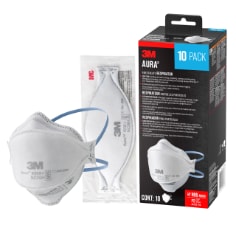
3M Aura Particulate Respirator 9205+ N95, 3 Pack
Best for: Adding respiratory protection during dusty cleanup situations where PPE is appropriate.
Why it fits this guide: Cleanup safety pages need practical gear, and respiratory protection is more useful than another repellent for contaminated storage areas.
- N95 particulate respirator format
- Useful during careful cleanup prep
- Pairs with gloves, disinfectant, and ventilation
Use note: A respirator does not make unsafe cleanup safe by itself. Follow CDC-style wet cleanup steps and escalate heavy contamination.
Bottom line
Mice and rats require the same logic but not the same scale. Identify the species, reduce attraction, use correctly sized controls, clean safely, seal routes, and bring in professional help when activity is large, exterior, recurring, or hard to access.
FAQ
How do I know if I have mice or rats?
Mice are usually smaller, with smaller droppings and tiny entry gaps. Rats are larger, leave larger droppings, may burrow outdoors, and require larger exclusion and safety planning.
Can mice and rats be controlled the same way?
They share core principles: food control, exclusion, traps, cleanup, and monitoring. Rats often require faster professional escalation, especially with burrows, sewers, or exterior activity.
What is the fastest way to get rid of mice and rats?
The fastest reliable approach is integrated: identify species and routes, remove food and shelter, use correctly placed traps or professional control, seal entry points, clean safely, and monitor.
Should I use poison for mice or rats?
Do not use rodenticide casually. Follow labels exactly, use bait stations where required, keep products away from children and pets, and consider professional help for rat or heavy infestations.
Safety sources reviewed
Reviewed against CDC rodent cleanup guidance, EPA bait safety, and UC IPM rat and mouse control principles.

Alexios Papaioannou is the founder and lead editor of Mice Gone Guide. He oversees research, article review, and content updates focused on mouse prevention, humane control, home proofing, and safety-first household guidance.