

Affiliate disclosure: As an Amazon Associate, Mice Gone Guide earns from qualifying purchases. Recommendations are selected to support the safety-first advice on this page, not to replace inspection, sanitation, exclusion, safe cleanup, or professional help when needed.
Natural rodent control
Herbs and essential oils can be useful as a small prevention layer, but they are not a reliable way to remove active mice. This guide replaces overhyped “herbal cure” advice with a practical, safety-first mouse-control system.

Quick answer
Herbal rodent repellents may help briefly in small, clean, low-pressure areas, but they do not solve an active mouse infestation. If mice have food, shelter, and an entry route, a strong scent usually pushes activity elsewhere instead of ending the problem. Use herbs only after you follow a proven sequence: identify fresh activity, remove food access, place traps, seal entry points, and clean droppings safely.
Helpful video: the realistic role of peppermint oil and scent repellents
This video is useful because it treats peppermint oil as one small prevention tool, not as a magic cure. Watch it before you spend money on stronger scents or more repellent pouches.
Use the video for
- Use scents only after food, nesting material, and entry gaps are handled.
- Place any scent deterrent away from traps, food-prep surfaces, children, and pets.
- Judge success by fresh droppings and activity, not by how strong the room smells.
Do not take it as
- Do not use oils as a substitute for sealing pipe gaps, garage edges, or foundation openings.
- Do not keep adding repellent if fresh droppings continue. That means the control plan is incomplete.
- Do not assume natural products are automatically safe around cats, birds, small pets, or asthma-sensitive people.
Editorial note: the video is included to make the guide easier to understand visually. The written checklist on this page is the recommended action sequence for Mice Gone Guide readers.
Make this page more useful for readers with this field checklist
Use this section as the practical bridge between reading and taking action. It keeps the advice specific, measurable, and safer for real homes.
Why herbal remedies disappoint during active mouse problems
Mouse behavior is driven by survival needs: food, warmth, nesting cover, and safe travel routes. Peppermint, lavender, cloves, bay leaves, eucalyptus, and similar scents may make one spot less comfortable, but they do not remove mice already nesting in a wall void, attic, appliance gap, or cluttered storage area.
The main problem is that scent fades. Oils evaporate, cotton balls dry out, and surface sprays do not reach hidden runways behind cabinets, pipes, baseboards, and insulation. A repellent can also interfere with trapping if it pushes mice away from the very routes where traps should be placed.
For the core process, start with the safe mouse removal hub, then use the mouse entry-point sealing checklist and mouse cleanup safety hub.
Herbal repellent comparison
| Option | Possible use | Big limitation | Best role |
|---|---|---|---|
| Peppermint oil | Short-term scent deterrent in cabinets, garages, or storage bins | Fades quickly; does not seal holes or remove mice | Supplement after sanitation and exclusion |
| Clove or cinnamon | Strong odor in small, contained spaces | Can irritate people or pets; uneven coverage | Limited support away from food and pet zones |
| Lavender or mint plants | Low-risk perimeter or garden support | Weak against indoor nesting and food access | Prevention, not removal |
| Vinegar or citrus sprays | Temporary odor disruption on compatible surfaces | Can damage finishes and fades fast | Light cleaning support, not control |
The control plan that actually supports long-term prevention
Confirm fresh signs first
Look for fresh droppings, gnaw marks, wall scratching, shredded nesting material, food damage, and rub marks. Use the mouse problem identification guide before adding scent products.
Remove the food reward
Store pantry food, birdseed, grass seed, and pet food in rigid sealed containers. Clean under appliances and remove cardboard, paper, and fabric clutter that can become nesting material.
Trap active routes before you repel them
Place traps along walls and near fresh evidence. Do not put strong oils directly beside traps unless you are deliberately steering movement, because scent can reduce trap interaction.
Seal entry points with durable materials
Use metal mesh, hardware cloth, metal flashing, mortar, or appropriate exterior sealant where mice enter. Repellents fade; exclusion lasts.

Safety rules for “natural” repellents
Natural does not always mean harmless. Essential oils can irritate skin, eyes, lungs, pets, and children. Avoid using concentrated oils around food-prep surfaces, pet bowls, aquariums, bird cages, bedding, and enclosed rooms with poor ventilation.

Recommended Amazon tools for natural rodent control
These picks support the article’s safety-first recommendation: scents can be supplemental, but exclusion, sanitation, traps, and cleanup solve more of the problem.

Mighty Mint Peppermint Oil Rodent Repellent Spray
Best for: Small prevention zones after cleanup, sealing, and monitoring are already underway.
Why it fits this guide: Useful when readers want a plant-based scent deterrent for low-risk spaces, but the article should make clear that scent is not removal.
- Plant-based peppermint scent support
- Better for prevention than active infestations
- Pairs with exclusion, sanitation, and traps
Use note: Do not use as the only control method. Keep essential-oil products away from children, pets, food-prep surfaces, and sensitive respiratory situations.
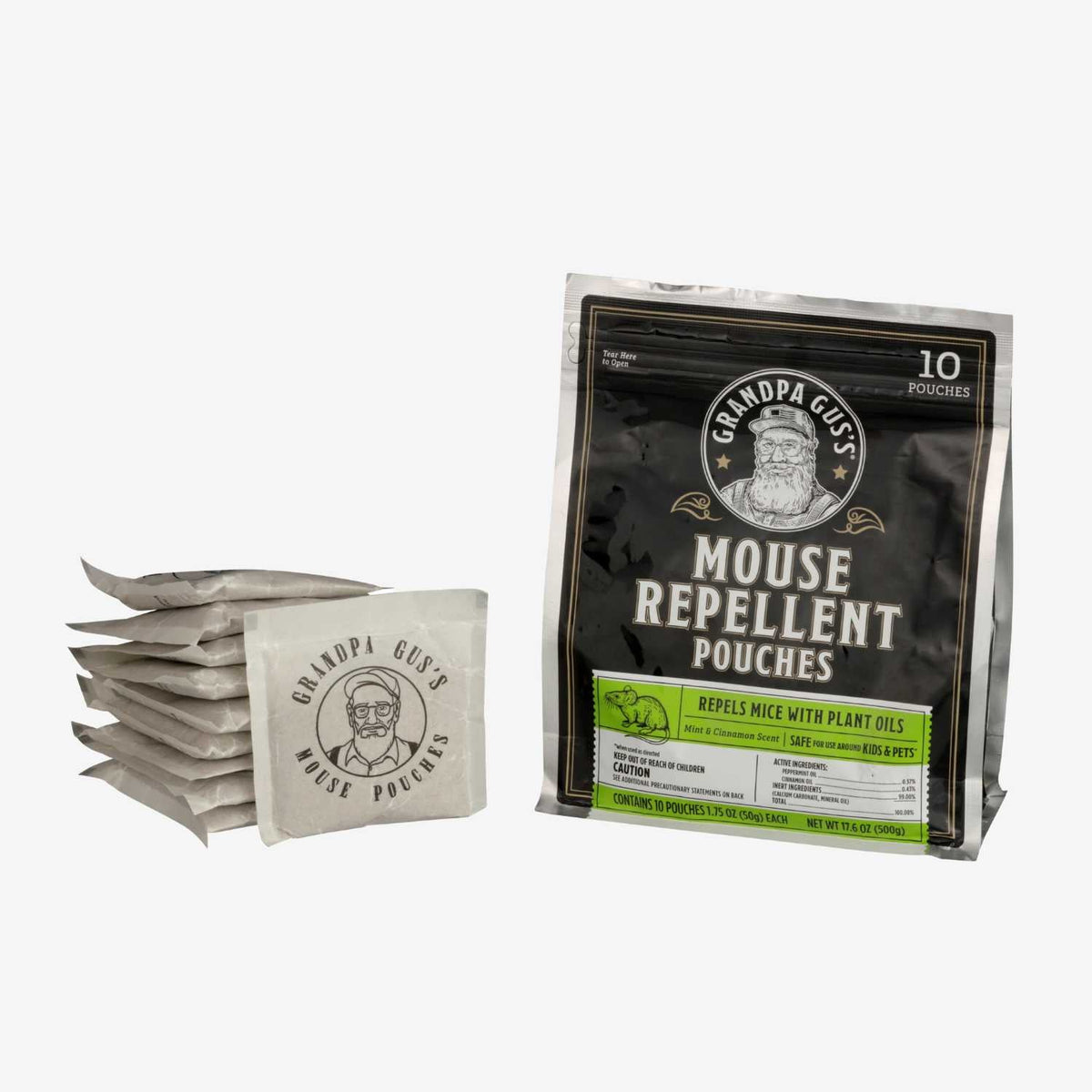
Grandpa Gus's Natural Mouse Repellent Pouches
Best for: Cabins, sheds, storage bins, RVs, machinery storage, and other enclosed areas where a pouch is easier than a spray.
Why it fits this guide: A good fit for prevention-focused articles because readers can place pouches in specific storage zones without spraying surfaces.
- Peppermint/cinnamon oil pouch format
- Cleaner than spraying in storage areas
- Best after food and nesting material are removed
Use note: Use only as directed. Do not place near traps if you are trying to attract mice to baited trap lines.

Xcluder Rodent Control Fill Fabric Roll, 4 in. x 10 ft.
Best for: Filling small gaps around pipes, utility penetrations, garage edges, and trim transitions before sealing or covering properly.
Why it fits this guide: Exclusion is the long-term fix. This belongs in nearly every rodent-control page because it solves the entry-point problem that repellents cannot solve.
- Stainless-steel wool blend for rodent exclusion
- Better investment than stronger scents
- Use with inspection and durable sealing
Use note: Do not rely on fill fabric alone where weather, movement, or large gaps require hardware cloth, flashing, mortar, or exterior-grade sealant.

Victor Mouse Traps M035-12, Plastic Pedal, 12 Pack
Best for: Targeted trapping along walls, behind appliances, and near fresh droppings when you need to confirm and reduce active mice.
Why it fits this guide: Snap traps are simple, visible, and auditable, which is better for DIY readers than hoping repellents or plug-ins solved the problem.
- Visible results and easy monitoring
- Works with bait and route placement
- Good for active indoor mouse routes
Use note: Place traps where children and pets cannot reach them. Use enclosed placements or covered stations when household access is a concern.
Bottom line
Use herbal repellents only as a small support layer after the real control work is underway. The strongest natural strategy is not stronger smell; it is fewer attractants, fewer entry points, safer cleanup, and better monitoring. Continue with how to get rid of mice safely or compare natural mouse repellents and their real limits.
FAQ
Do herbal remedies get rid of mice?
Herbal remedies may briefly discourage mice in small areas, but they do not remove an active infestation or close entry points. Use them only as supplemental prevention after inspection, sanitation, trapping, and exclusion.
What herbal scent do mice dislike most?
Peppermint, clove, and other strong scents are commonly used, but scent strength fades quickly and results vary. Physical exclusion and food control are more reliable.
Are essential oils safe around pets?
Not always. Concentrated essential oils can irritate or harm pets, especially cats, birds, and small animals. Keep oils away from pet areas and follow product safety guidance.
What should I use instead of herbs for mice?
Use a complete plan: confirm signs, remove food, place traps on active routes, seal entry points with durable materials, clean contamination safely, and monitor for new activity.
Safety sources reviewed
Reviewed against CDC rodent cleanup guidance, EPA rodenticide safety guidance, and university IPM principles emphasizing sanitation, exclusion, monitoring, and targeted control.

Alexios Papaioannou is the founder and lead editor of Mice Gone Guide. He oversees research, article review, and content updates focused on mouse prevention, humane control, home proofing, and safety-first household guidance.