
Steel Wool vs Copper Mesh for Mice: Durability, Rust & Best Use
Direct durability comparison between steel wool, bronze wool, and knitted copper mesh for sealing rodent entry holes. Lab testing on rust resistance and sealant compatibility.
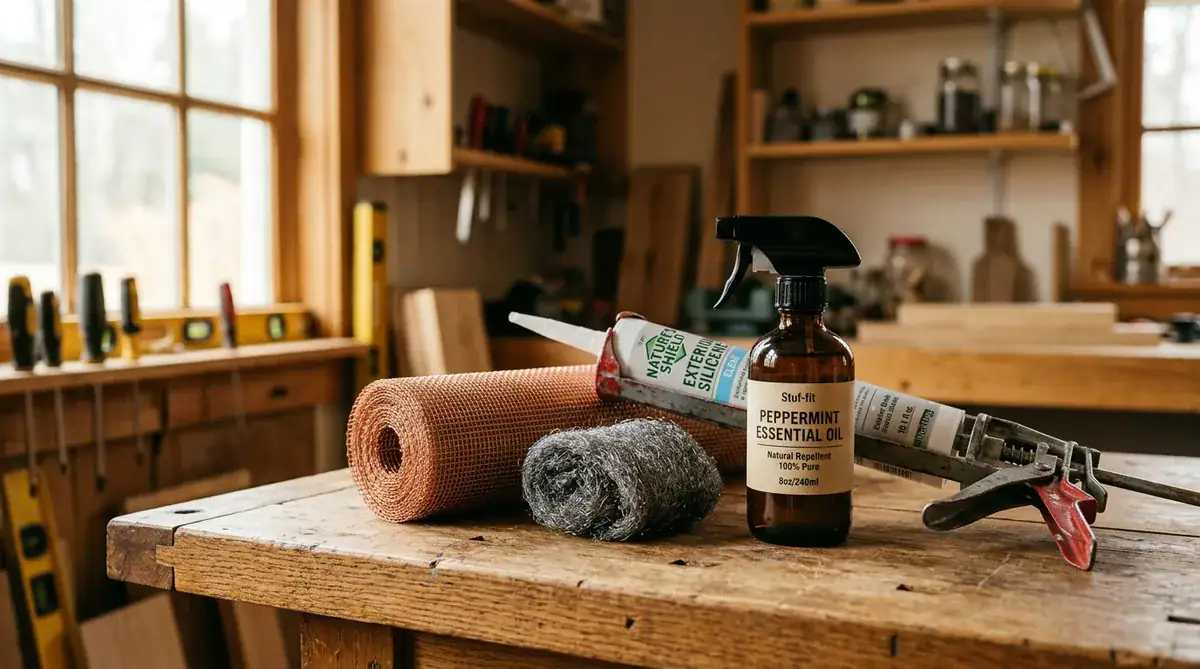
Direct Answer: Copper Mesh vs Steel Wool
Quick Answer: Which Should You Use?
Use copper mesh for gaps that stay damp or touch masonry, and steel wool for small dry indoor holes you will seal with caulk anyway. Both stop mice — rodents cannot chew through either without hurting their teeth — but plain steel wool rusts when wet, stains surrounding material, and eventually crumbles, while copper mesh for mice stays intact for decades in the same gap. The winning move for most homes is stuffing copper mesh into the hole and capping it with caulk or pest-proof expanding foam.
The classic mistake is packing steel wool for mice holes under a sink, around pipes, or behind the dishwasher without a sealant cap — moisture rusts it into orange powder within a year and the gap reopens. Copper mesh costs more per foot but never needs re-doing.
Related: how small a hole a mouse can fit through and the full mouse-proofing walkthrough.
Copper mesh is the better long-term choice for most damp or exterior residential gaps because it does not rust the way steel wool does. Coarse steel wool is acceptable for small, dry interior gaps when it is tightly packed and sealed over, but UC IPM notes that steel wool makes a good temporary plug that may rust over time, so it fails sooner in exterior, crawlspace, or plumbing locations. For large openings and vents, use mechanically fastened 1/4-inch galvanized hardware cloth. No fill material functions as a durable barrier without a compatible perimeter sealant.
In This Exclusion Materials Guide:
- Match the Material to the Gap
- Interactive Exclusion Material & Sealant Matcher
- Complete Comparison Matrix: Copper vs Steel vs Hardware Cloth
- Sealant Compatibility & Application Guide
- Location-Specific Sealing Decisions
- Video Guide: Professional Hole Sealing Techniques
- How to Seal a Mouse Hole: Step-by-Step Sequence
- Frequently Asked Questions
Match the Material to the Gap
Rodent exclusion fails when homeowners treat expanding foam or a handful of steel wool as a universal fix. Before selecting an exclusion product, evaluate these core criteria:
- Opening Size: Irregular gaps under 1/2 inch around pipes require flexible mesh fill; openings larger than 1/2 inch require rigid hardware cloth.
- Moisture Exposure: Exterior foundations, crawlspaces, and bathroom plumbing experience humidity and condensation. Non-rusting pure copper or stainless steel is mandatory.
- Mechanical Fastening: Vents and roofline soffits require physical screws and washers, not loose stuffed pads that can be pushed out.
- Preserving Building Function: Weep holes in brick veneers and attic vents must maintain airflow and water drainage while excluding rodents.
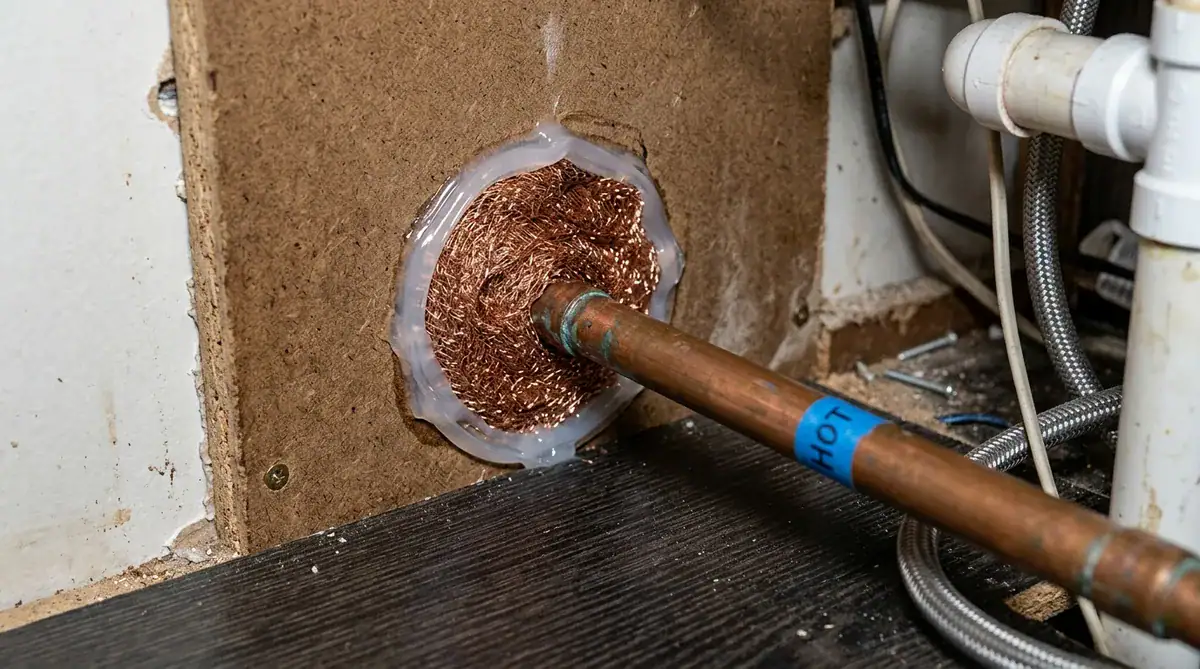
Complete Comparison Matrix: Copper vs Steel vs Hardware Cloth
| Criterion | Woven Copper Mesh | Coarse Steel Wool | 1/4″ Hardware Cloth |
|---|---|---|---|
| Optimal Gap Size | Irregular gaps up to 1/2″ | Small interior gaps under 1/4″ | Openings 1/4″ to 2″+, vents, screens |
| Rust & Corrosion | 100% rust-proof; lifetime durability | Corrodes quickly when wet; rust stains walls | Hot-dipped galvanized or stainless resists rust |
| Gnaw Resistance | Mice cannot chew through packed fibers | Holds if sealed; loose fibers can be pulled | Exclusion standard for mice and rats |
| Primary Failure Mode | Pushed aside if not caulked over | Rusts away in moisture; fire risk near electrical | Poor mechanical fastening at perimeter edges |
Sealant Compatibility & Application Guide
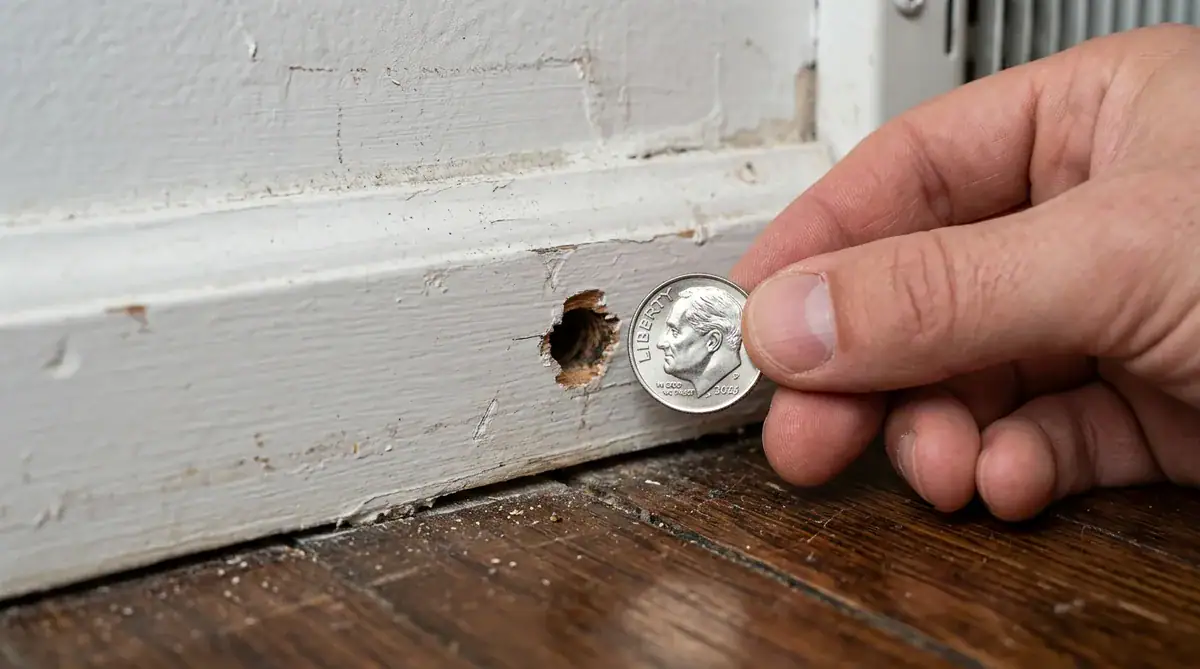
Mesh without caulk can be pushed aside by rodents. Caulk without mesh can be easily chewed through. Pair them together using this guide:
- 100% Exterior Silicone: Outstanding water resistance and flexibility around pipes. Ideal for plumbing penetrations and outdoor utility entries. Does not accept paint.
- Polyurethane Elastomeric Sealant (e.g. Sikaflex): Industrial-grade bonding to brick, concrete, and metal siding. Highly flexible and gnaw-resistant.
- Expanding Spray Foam (“PestBlock”): Use ONLY as a backing material. Never rely on spray foam alone without copper mesh backing.
Video Guide: Professional Hole Sealing Techniques
Watch Twin Home Experts demonstrate why steel wool fails outdoors and how to properly seal mouse entry holes with durable exclusion materials:
How to Seal a Mouse Hole: Step-by-Step Sequence
- Clean the gap: Scrape away flaking paint, crumbling drywall, and old caulk so sealant can bond firmly.
- Cut copper mesh: Cut a piece approximately twice the volume of the opening using shears.
- Pack firmly: Push the mesh into the void with a screwdriver until tightly compacted, leaving a 1/4-inch recess.
- Cap with sealant: Apply a generous bead of silicone or polyurethane over the mesh, smoothing it flush with the surrounding wall.
- Inspect after 7 days: Check the seal for gnaw marks or shifting. Reapply caulk if needed.
Frequently Asked Questions
Copper mesh vs steel wool for mice: which is better outdoors?
Copper mesh is far better outdoors because it will never rust. Steel wool rusts and degrades when exposed to moisture, leaving rust streaks on walls and opening gaps for mice.
Can mice chew through copper mesh?
No. Mice cannot chew through tightly packed woven copper mesh. The springy metal fibers give no tooth purchase.
Can mice chew through hardware cloth?
No. Standard 1/4-inch 19-to-23 gauge galvanized hardware cloth is impervious to both mice and rats and is the universal standard for vent and crawlspace exclusion.
References & Exclusion Standards: