
Disclosure: this page contains affiliate links. As an Amazon Associate, Mice Gone Guide earns from qualifying purchases, at no extra cost to you.
Mice problem action box
Need mice gone fast? Choose DIY control or professional help before activity spreads.
DIY trapping can work for light activity, but recurring droppings, attic noises, wall sounds, insulation contamination, or mice returning after sealing may require a professional inspection. Use the checklist below to act quickly and safely.
Disclosure: Some product links may be affiliate links. If you buy through them, we may earn a commission at no extra cost to you. For heavy contamination, illness risk, or unsafe areas, contact a qualified professional.
Mice Gone Guide
Mouse Traps and Baits Hub: Selection, Placement, and Risk-Aware Use
Helpful video: practical mouse-control steps
Watch this for a visual overview, then follow the written steps on this page for cleanup, proofing, bait placement, and safety details.

Best mouse trap type by situation
Snap traps
Enclosed traps
Live-catch traps
Electric traps
Rodenticide bait stations
Snap traps for mice
Snap traps remain useful because they are visible, inexpensive, and allow you to confirm results. Possible reasons for poor catches include placement, competing food, trap condition, or misidentified evidence. Our snap traps for mice guide covers setup, baiting and safe placement step by step. Put traps along walls, behind objects, near droppings, in dark corners, under sinks, behind appliances, and along garage edges. Use multiple appropriately placed traps on confirmed routes, check daily, and monitor new evidence; no quantity sets a clearance deadline.
Best bait for mouse traps
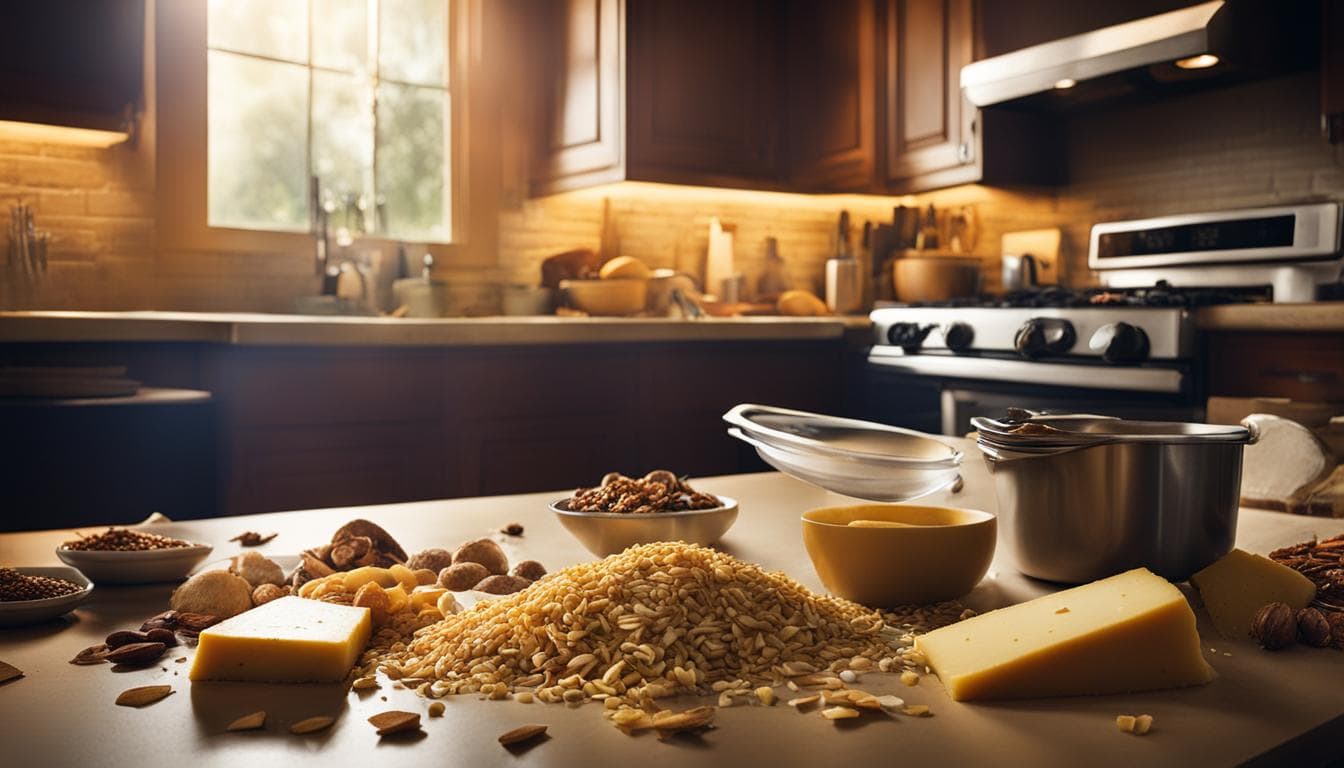
Use a tiny amount of sticky bait or the food mice are already eating. Peanut butter works in many homes, but damaged cereal, oats, seeds, chocolate, pet food, or nesting material can also be useful. Bait does not fix bad placement. If bait disappears without a catch, use less bait, secure it better to the trigger, and move the trap to the active route.
For the full bait guide, use best bait for mouse traps.
Mouse trap placement
Trap placement should follow evidence: droppings, gnaw marks, food damage, rub marks, and repeated sound zones. Mice tend to travel edges instead of open floors. If you place a trap in the middle of a kitchen, it may look visible to you but invisible to the mouse route. If droppings are under the sink, place protected traps under the sink. If droppings are behind the refrigerator, trap the appliance route. If droppings are in the garage, trap along wall edges and behind stored items.
Traps around pets and children
Safety comes before catches. Open snap traps do not belong where children, pets, or non-target animals can reach them. Use inaccessible placements, enclosed trap designs, or professional help if the active route is in a risky area. Never place bait, poison, or traps on food-preparation surfaces. Keep all product packaging and labels so you can follow instructions and respond correctly if an exposure occurs.
Rodenticides and bait stations
Rodenticides are toxic products. They can create risks for children, pets, wildlife, and non-target animals when misused. Indoors, they can also lead to dead mouse odor inside walls or hidden spaces. If rodenticide is used, it must be used exactly as labeled and in the correct secured station. Many homeowners should start with sanitation, exclusion, and traps before considering toxic bait.
Recommended trap and safety products
Affiliate disclosure: as an Amazon Associate, Mice Gone Guide may earn from qualifying purchases. Product availability, packaging, sellers, and labels can change. Check the current listing and product label before buying or using anything around children, pets, food, or contaminated areas.

Victor Metal Pedal Wooden Mouse Traps, 20 Pack
Best for: Placing several traps along active wall routes, behind appliances, and near droppings where children and pets cannot reach them.
Avoid if: Avoid open snap traps in accessible areas with children, pets, or non-target animals.
Check current price on Amazon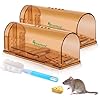
CaptSure 2-Pack Humane Live-Catch Mouse Traps
Best for: Product-category reference only, not routine household use. CDC advises against live traps because frightened rodents may urinate and increase exposure risk.
Avoid if: Avoid live traps if you cannot inspect them often, if the infestation is heavy, or if local release rules are unclear.
Check current price on Amazon
Heavy-Duty Nitrile Disposable Gloves
Best for: Reducing direct hand contact while wiping droppings, bagging disposable towels, and handling contaminated liners.
Avoid if: Do not reuse disposable gloves after cleanup or touch clean surfaces with contaminated gloves.
Check current price on AmazonThe complete trap-to-proofing sequence
- Confirm signs of mice and map active routes.
- Remove competing food, including pet food, seed, trash, crumbs, and open pantry items.
- Place enough traps along active routes.
- Check traps daily and clean catches safely.
- Wet-clean droppings and contaminated surfaces.
- Seal entry points after active pressure drops.
- Monitor for new droppings for at least two quiet weeks.
Example situations for mouse traps and bait
A practical way to organize a mouse-control inspection is to stop treating the entire house as one vague infestation. Start with the room or surface where the evidence appears, then decide whether the priority is identification, cleanup, trapping, sealing, or prevention. The same evidence can mean different things in a kitchen, garage, wall void, apartment, or storage area.
Droppings behind stove
Mice in apartment
Garage activity
Trap not catching
Use this table before buying anything. A trap helps only when there is active mouse travel. A disinfectant helps only after contaminated material is wetted and wiped safely. Sealing material helps only when the gap is correctly identified and the repair does not block required ventilation, drainage, combustion air, or access for utilities.
Final checklist before you act
- Keep children, pets, and unnecessary people away from contaminated or trapped areas.
- Photograph droppings, gnaw marks, nests, rub marks, food damage, or possible entry holes before cleaning or sealing.
- Remove food access first: pet food, bird seed, pantry spills, trash, snacks, and cardboard clutter.
- Place traps only on confirmed active routes and only where they can be used safely.
- Wet droppings and nesting material with disinfectant before wiping or disposal.
- Seal gaps with durable, chew-resistant materials after active routes are controlled.
- Monitor the same spots for new droppings for at least two quiet weeks.
The core principle for mouse traps and baits is simple: identify the strongest evidence, choose the safest next step, close the cause of the problem, and monitor for new activity. That sequence is more useful than a miracle claim and safer than relying on a single product.
Frequently asked questions
What mouse trap works best?
For most ordinary home situations, snap traps work well when enough traps are placed along active routes. Enclosed traps may be better where children or pets are a concern.
Are humane mouse traps effective?
Live capture is not automatically humane. CDC advises against household live traps because frightened rodents may urinate and increase exposure; relocation and prolonged confinement also have welfare limits. Use appropriate protected snap traps and daily checks.
Should I use poison bait for mice?
Use rodenticides only according to the label and in secured stations. Trapping is often preferred indoors because it avoids toxic bait risks and helps locate catches.
Where should mouse traps be placed?
Place traps along walls, behind objects, in dark corners, and near droppings, gnaw marks, or active runways.
How many mouse traps do I need?
Use several traps at once. A single trap is rarely enough when droppings appear in multiple areas or when mice have several runways.
More practical questions readers ask
What should I do tonight if I cannot finish the whole job?
Do the safest reversible actions first. Move exposed food into rigid containers, keep children and pets away from contaminated areas, photograph evidence, place traps only where they can be used safely, and avoid dry cleanup. Do not start demolition, roof work, wall cutting, heavy contamination cleanup, or rodenticide use when you are tired or unsure.
What should I track after taking action?
Track the date, room, evidence type, cleanup completed, traps placed, catches, sealed gaps, and new signs. Simple notes prevent repeated guessing. New droppings in a previously cleaned area warrant inspection for ongoing activity; they do not identify a particular access route or prove that a repair failed. If traps are untouched but food damage continues, placement may be wrong or competing food remains.
What should happen after this step?
Every mouse problem has connected parts: signs, active removal, safe cleanup, exclusion, prevention, and monitoring. After the immediate problem is handled, check the related step that closes the loop. Droppings need cleanup and active control. Traps need food control and placement. Sealing needs monitoring. Prevention needs monthly checks.
What should I avoid believing?
Avoid guaranteed timelines, miracle repellents, fake testing claims, and one-product solutions. Mice are controlled by reducing access to food and shelter, trapping or otherwise controlling active animals, cleaning contamination safely, sealing entries, and verifying that new signs stop.
When should I stop DIY and call a professional?
Call a qualified professional for repeated activity after correct DIY steps, heavy droppings, contaminated insulation, HVAC contamination, inaccessible wall or attic activity, dead-rodent odor, wiring damage, or health-risk occupants. Professional help is also appropriate when you cannot place traps, clean waste, or seal gaps safely.
Sources and safety references
- CDC: How to Clean Up After Rodents
- CDC: Hantavirus Prevention
- UC IPM: House Mouse Pest Notes
- EPA: Controlling Rodents and Regulating Rodenticides
This page is educational information for ordinary homes. It is not medical, legal, pesticide-label, or professional remediation advice. Follow product labels, local rules, and professional guidance for high-risk conditions.
Continue the mouse-control plan
Before choosing a device, use the signs hub to identify the route. Then follow the trap-placement guide, use safe cleanup for contamination, and finish with durable proofing.
How to use this hub
Use this hub to compare control options without treating a product as a substitute for inspection. The right choice depends on whether you can place, protect, and check it safely; whether activity is actually confirmed; and whether sanitation and exclusion are being addressed.
| Guide | Use it when |
|---|---|
| Find active routes | you need evidence before choosing a device |
| Place traps by room | you need safe accessible placement locations |
| Follow the full removal sequence | activity spans more than one route |
| Understand bait risk | you are considering a pesticide option |
| Prevent repeat activity | you are ready to repair access points |
Make the next decision from evidence
A dependable mouse-control plan moves from inspection to safe action, then follow-up. Avoid treating one sound, one product, or one old sign as a complete diagnosis. Use the linked guides to document what you find, protect people and pets, and repair the conditions that allow repeat activity.
Frequently asked questions
Are baits always faster than traps?
No. Choice should reflect the setting, safety, accessibility, and the ability to monitor results. All rodenticides require strict label compliance and protection from children, pets, and wildlife.
Editorial review and sources
Reviewed August 14, 2026. Mice Gone Guide uses public-health and university integrated-pest-management guidance to explain household options. This page is general education; follow product labels and obtain qualified help for unsafe, inaccessible, or extensive situations.
- UC IPM: House Mouse
- Cornell CALS: Managing Mice and Rats
- NC State Extension: Structure-Invading Mice
- CDC: How to Clean Up After Rodents
About the author: Alexios Papaioannou is the founder and lead editor of Mice Gone Guide. Content is reviewed for practical household relevance against CDC cleanup guidance, EPA safety principles, and university IPM resources.
Household trapping reference: CDC How to Trap Up to Control Rodents recommends snap traps, daily checks, and keeping traps out of reach of children and pets; it advises against household glue and live traps.