
Signs of Mice Infestation: How to Spot Activity Before It Spreads
Learn how to detect mice before damage escalates. Identify fresh droppings, scratching noises in walls, runway grease marks, chewed wiring, and nesting debris.
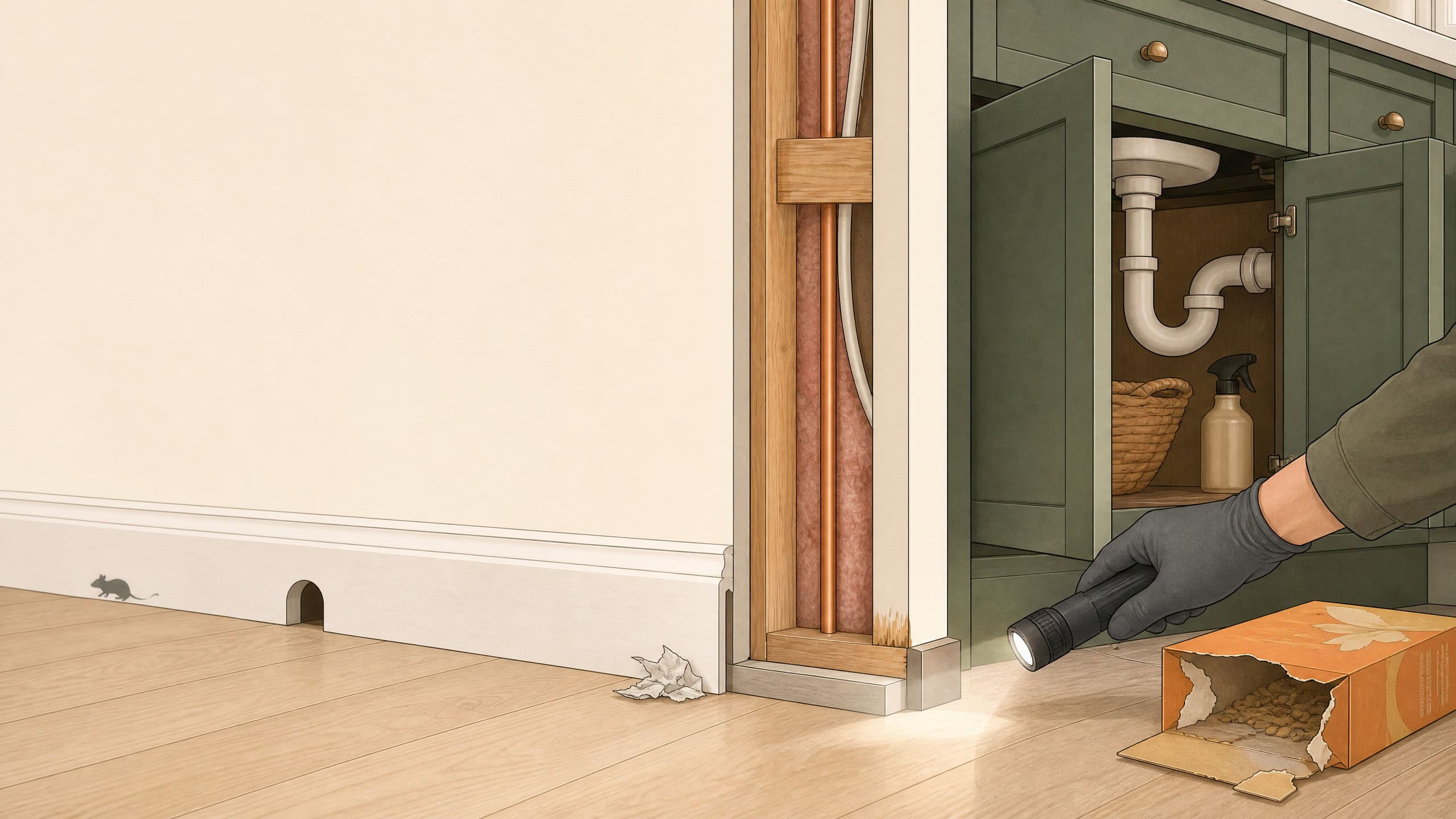
Direct Answer: The Primary Warning Signs of Mice
The conclusive physical signs of mice are: (1) fresh, dark rice-shaped droppings (3–6mm); (2) nocturnal scratching sounds in walls between 11 PM and 3 AM; (3) paired chisel gnaw marks on wood, drywall, or food packaging; (4) shredded paper or insulation nesting material; (5) dark, greasy rub marks (sebum) along baseboards; and (6) a musky ammonia-like urine odor. Each sign indicates a specific travel route and dictates an exact next action.
Discovering rodent evidence is stressful, but treating your entire home as an undifferentiated emergency leads to wasted spending. Use this evidence-to-action diagnostic matrix to map your exact problem to the right solution.
In This Diagnostic Guide:
- Evidence-to-Action Triage Table
- Interactive 60-Second Infestation Severity Scanner
- How to Distinguish Mice from Other Animals
- Fresh vs. Old Signs: How to Tell & Why It Matters
- Size Reference Guide for Rodent Droppings
- Video Guide: 7 Early Warning Signs of Mice
- Room-by-Room Inspection Checklist
- 14-Day Monitoring Observation Log
- Frequently Asked Questions
Evidence-to-Action Triage Table
Connect each physical sign directly to its corresponding solution guide. Do not clean up evidence before photographing and mapping the route!
| Sign Observed | What It Typically Indicates | Immediate Correct Action |
|---|---|---|
| Small dark droppings (3–6mm) | Active travel runway or feeding site. | Identify with our droppings guide, then wet-clean safely. |
| Scratching sounds in wall at night | Mice moving through stud bays (11 PM – 3 AM). | Trap baseboard exits. See mice in walls guide. |
| Chewed cereal boxes / pet food | Active pantry foraging. | Transfer food to airtight glass/metal containers; trap pantry. |
| Greasy smudge marks on baseboard | Sebum oil from fur marking high-traffic runway. | Place snap traps perpendicular directly across the smudge mark. |
| Overhead scampering in ceiling | Attic activity / roofline entry. | Inspect roof eaves and framing. See attic insulation guide. |
How to Distinguish Mice from Other Animals
| Animal | Dropping Characteristics | Noise / Activity Pattern | Secondary Markers |
|---|---|---|---|
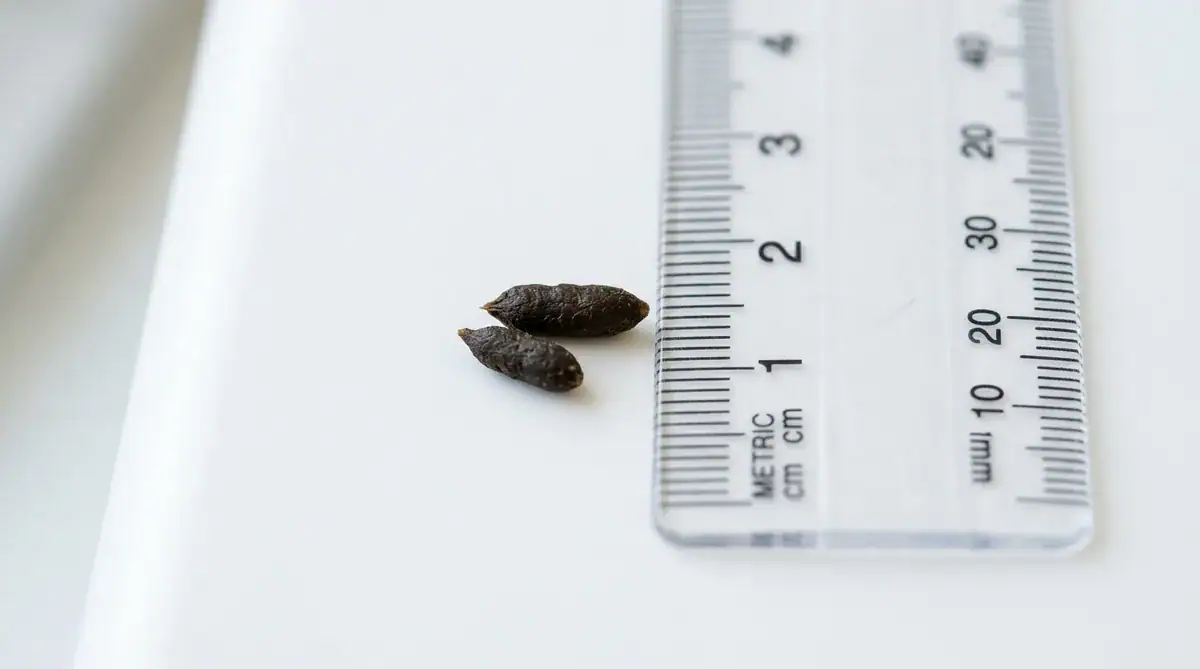
| House Mouse | 3–6mm, rice-shaped, pointed ends | Nocturnal scurrying (11 PM – 3 AM) | Gnawed food boxes, rub marks along walls |
| Norway / Roof Rat | 12–20mm, blunt capsule / banana shape | Loud thumping, scraping | Large 2-inch entry holes, outdoor burrows |
| Tree Squirrel | Similar to rat, slightly rounder | Daytime only (morning & afternoon) | Chewed exterior fascia boards, acorns in attic |
| Bat Colony | Crumbles to powder with shiny insect parts | High-pitched chirping, dusk flight | Guano piles beneath attic gable louvers |

Video Guide: 7 Early Warning Signs of Mice
Watch this visual field guide explaining how pest technicians confirm mouse activity in residential homes:
Room-by-Room Inspection Checklist
Conduct an inspection using a high-lumen flashlight along these perimeter priority zones:
- Kitchen & Pantry: Behind refrigerator, under dishwasher toe-kick, lower cabinet rear corners, under-sink plumbing pipe penetrations.
- Garage: Along foundation mudsills, corners of garage overhead doors, around grass seed and pet food bags.
- Laundry Room: Dryer exhaust vent pipe junction and washing machine drain hose openings.
- Basement & Crawlspace: Rim joists, sill plates, and main electrical conduit entries.
- Attic: Soffit transitions, top plates, and hatch frame perimeter.
14-Day Monitoring Observation Log
| Date | Location Inspected | Evidence Observed | Corrective Action Taken | Activity Ceased? |
|---|---|---|---|---|
| Day 1 | Kitchen lower pantry | 5 fresh droppings, chewed rice bag | Wet-cleaned; food into glass; 2 snap traps set | No |
| Day 3 | Pantry | 1 mouse caught in trap | CDC wet disposal; re-baited with peanut butter | No new droppings |
| Day 14 | Pantry & Kitchen | Zero droppings, zero trap hits | Exclusion verified; monitoring complete | YES (Cleared) |
Frequently Asked Questions
What is the first sign of mice in a house?
The most frequent first indicator is discovering small, dark rice-shaped droppings along kitchen baseboards, under sinks, or behind appliances.
Can I have mice but no droppings?
Yes. In early invasions or when mice travel strictly inside walls and ceilings, you may only hear nocturnal scratching without seeing surface droppings.
Do scratching noises always mean mice?
No. Day noises are often squirrels or birds. Fluttering sounds point to bats. Always corroborate sound with physical droppings or gnaw marks.
References & Scientific Standards:

Alexios Papaioannou is the founder and lead editor of Mice Gone Guide. He oversees research, article review, and content updates focused on mouse prevention, humane control, home proofing, and safety-first household guidance.